
A Nepalese baby left on the streets as “chum” for her begging parents (note the cup with money). I watched this baby, from across the street, for two hours. She was unattended the entire time. No parents to be seen. People just walked by the baby, a few putting money in the container. But the baby was well-dressed, with some food and water next to its side. I have seen babies used this way, as chum, on many occasions, without any parental thought to their risk of life. It is so prevalent, what can one person do in this giant world? Can you save them all? Poverty is a sad thing.
What Would You Do?

I returned to the hotel and was greeted by this older fellow, with the white beard, who asked me to hold a scale, so he could measure his baby’s weight. He kept an extensive diary of daily weights. He told me the baby belonged to him and his wife. I saw no woman present when he opened his hotel room door. And, he’s old, a better man than I. I have no proof of his intensions, however suspected he was going to sell the baby. I first thought I would report him to the hotel staff. I then thought the baby might just be better off being sold or adopted. It was quite a moral dilemma.
The Chinese Bath House
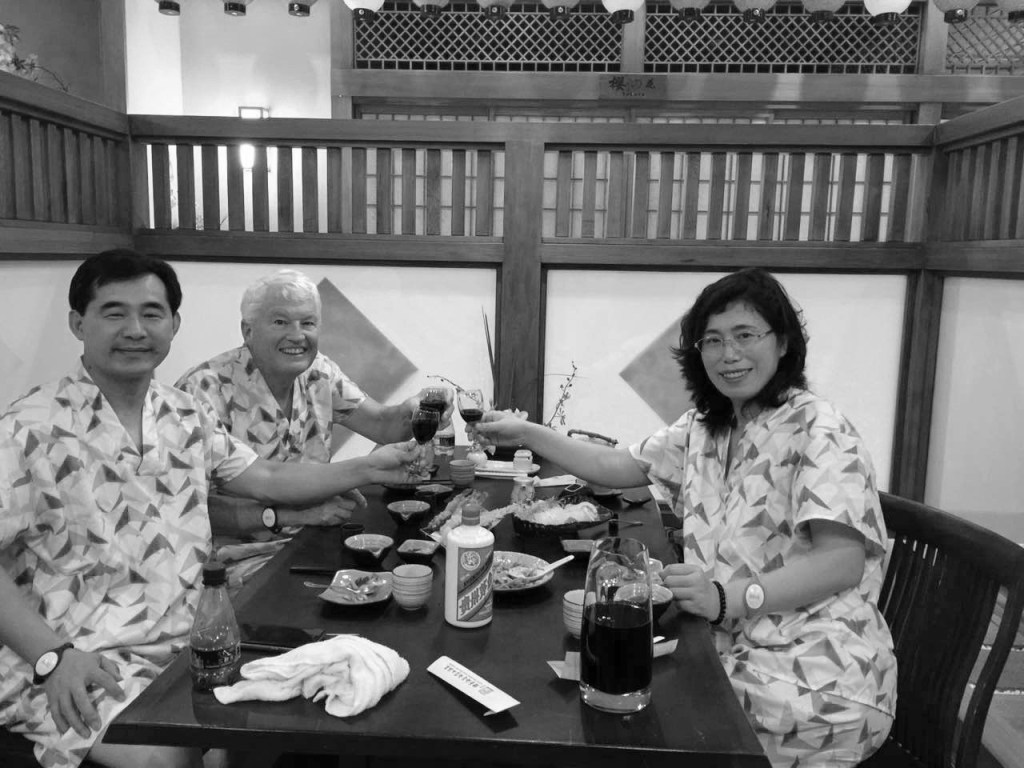
Upon entering the beautiful spa, the women go to one side, the men to the other side of the building. Here you undress (completely naked), with only a wash cloth. Folks shower and then soak in one of three large pools, all at different temperatures (with a bunch of other naked guys, including father and sons). After the shower, lay on a table while a male attendant scrubs you to remove any dead skin. Then it’s shower again and dress in PJ’s. Receive a one-hour massage. Join the women and lay on hot rocks in one of three large saunas. Enjoy a delicious Japanese dinner, complete with wine. Back to the soaking pools, shower and home. SEVEN HOURS!
Sipping Kopi Luwak
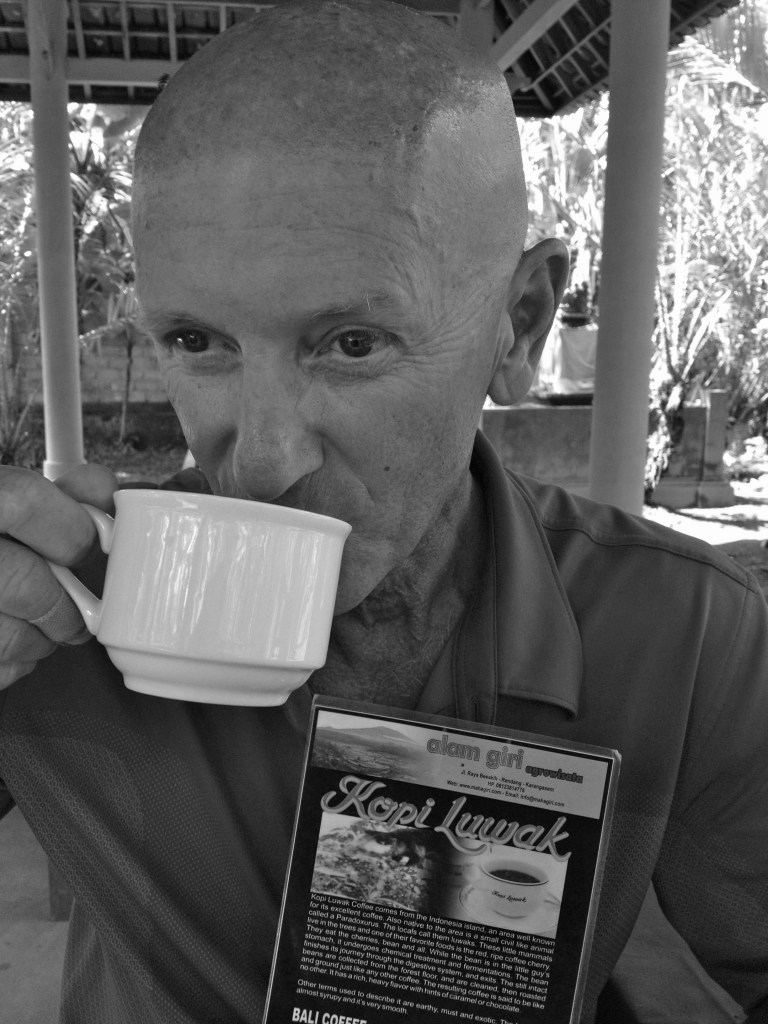
Sipping Kopi Luwak in Bali, Indonesia. Kopi Luwak, or civet coffee, is one of the world’s most expensive and low-production varieties of coffee. It is made from coffee beans that have been eaten by the Asian palm civit (monkey) and other related civets, and passed through its digestive track. A civet eats the berries for their fleshy pulp. In the digestive tract, the civet’s enzymes seep into the beans, making shorter peptides and more free amino acids. After passing through a civet’s intestines, the beans are then defecated, keeping their shape. After gathering, thorough washing, sun drying, light roasting and brewing, these beans yield an aromatic coffee with much less bitterness. All of the above being said, it tasted like cowboy coffee, coffee boiling for a long period of time. One time was enough for me.
Smokey Mountain Dump, Manila
North Cemetery, Manila

When traveling long distances, it always seemed smart to spend a few days smelling the surrounding roses. What do I mean? If you fly 18 hours to Southern Asia, why not spend three or four days seeing another country. So, brother Tom asked me to take us to Manila, after completing our Vietnamese business. After all, it was only a two hour flight from Ho Chi Minh City. I decided to give Tom an adventure.
First, we stayed in a beautiful part of Manila, the Makati Central Business District. Fine restaurants, entertainment, shops, and pubs. After all, we always stayed in safe areas, with excellent hotel accommodations.
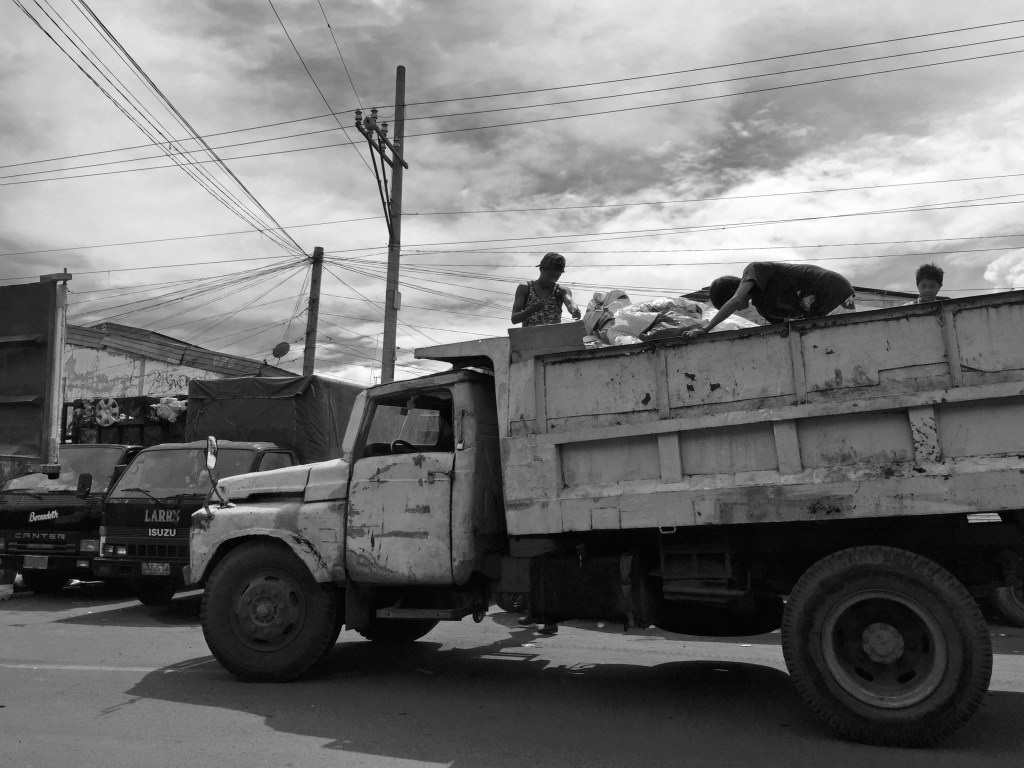
What was my adventure? I hired a driver and we visited the Smokey Mountain Dump. Twenty-thousand people living in the slums, scavenging for food, sorting trash in the incoming dump trucks. Fighting each other to see who could jump into the dump trucks. This was poverty that I had never seen. Dirt streets with potholes, and the smell was awful. People stared at us with disgust.
We also visited the North Cemetery, one of the largest cemeteries in the Philippines, with ten thousand poor squatters living in the mausoleums. No electricity; no sewer; no toilets; no heat; no schools; no place to play, other than the muddy streets; just cover, from the rain, while living in the mausoleums. Young children have little shot.
We could not leave the car, as the driver said it was not safe. The inhabitants are desperate.
Warren Buffett calls it the luck of the ovarian lottery. “You don’t know whether you’re going to be born black or white. You don’t know whether you’re going to be born male or female,” he explained. “You don’t know whether you’re going to be born infirm or able-bodied. You don’t know whether you’re going to be born in the United States or Afghanistan.”
My advice? When traveling, take some time to see how the other half, or three-quarters, lives. We take for granted the “luck” of being born. We wrongfully tend to complain about not having this, or that. Seeing poverty is humbling.
The Mayor of Laiyang, China

I had a luncheon with the Mayor of Laiyang, China. Laiyang is a city with a population of 1,000,000, of which 70% are farmers. Laiyang is famous for the Laiyang Pear.
Mr. Mayor was not friendly, however after several toasts with Baijiu, I inquired, “Do you think China will ever be a democracy?” He responded, “Never. We have 1.3 billion people. Many are uneducated. If we let them vote, they would vote for the politician promising the most. We’ll let them be capitalists, but never will they vote.”
Loi Krathong & Yi Peng
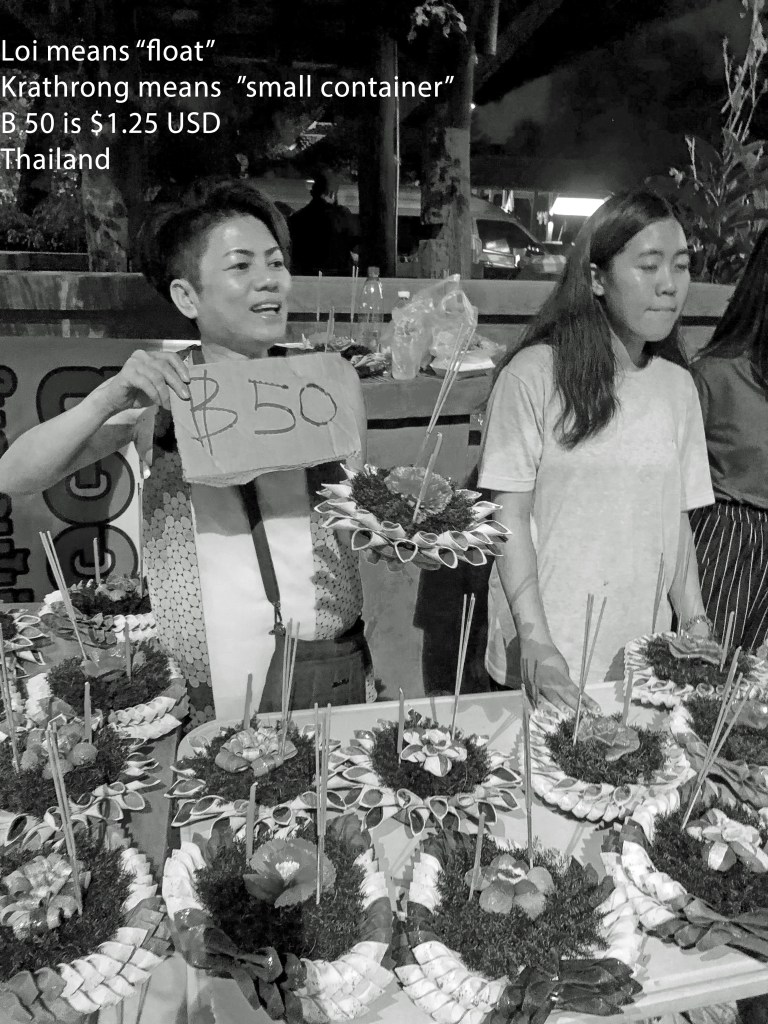

On the night of the full moon, of the 12th month, Thais launch their krattong (float, top picture)) on a river, canal or a pond, making a wish as they do so.
Yi Peng is a lantern festival. The most elaborate Yi Peng celebrations can be seen in Chiang Mai, the ancient capital of the former Lanna kingdom, where now both Loi Krathong and Yi Peng are celebrated at the same time, resulting in lights floating on the waters, lights hanging from trees/buildings or standing on walls, and lights floating in the sky. Yi Peng is forbidden in Bangkok as the thousands of 5 foot lanterns disrupt air traffic. It is mostly celebrated in Chiang Mai, however 79 flights were cancelled last year.
Mr. Zhang
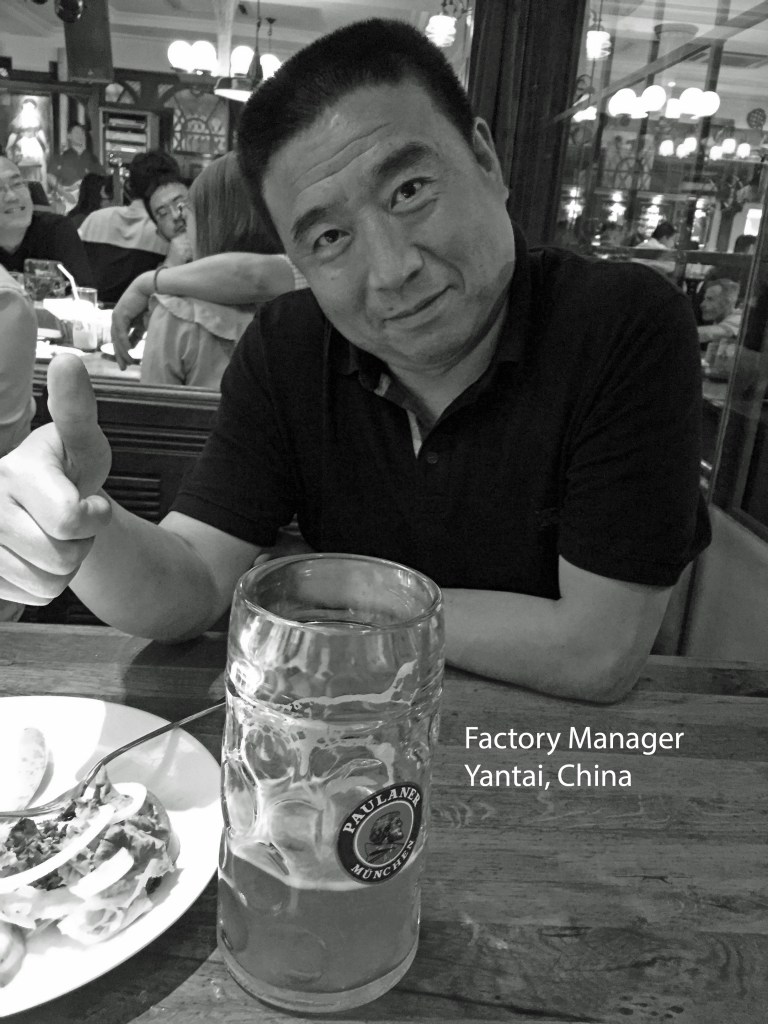
The manager of our Chinese factory, Mr. Zhang, a strong believer in social responsibility, who thinks of me as a mentor or father. In fact, I call him “errza,” the Chinese word for son. One day, after a rather difficult negotiation over the price of the Splash Stick, he wanted to ask me one final question. Mr. Zhang asked, “Why don’t you call me errza anymore?” I felt awful.
I asked Mr. Zhang to automate the sorting of the Stix. They are now sorted with all Stix in one direction, however sorted by hand. Mr. Zhang replied, “No, I want to hand sort. Machines would be noisy and my workers could not hear music.” Mr. Zhang is a talented factory manager, who cares dearly about his people.
The Border Between North & South, Korea
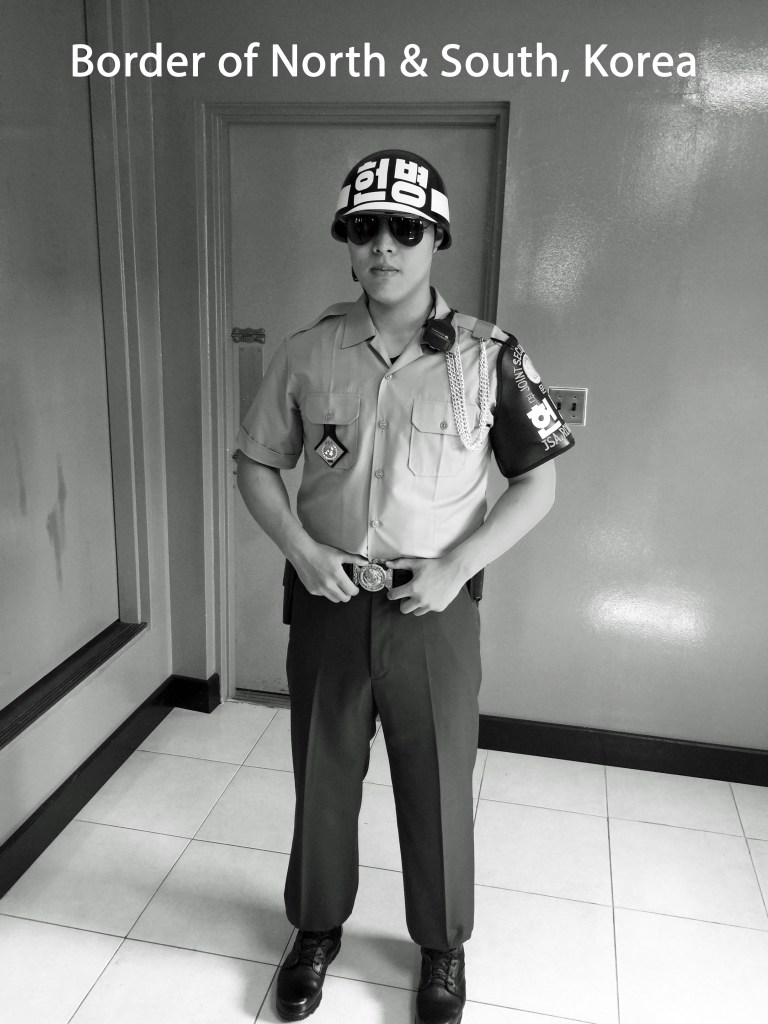
I wanted to see the border between South & North Korea. The demilitarized zone (DMZ) is a strip of land between the two countries to act as a buffer. The Joint Security Area (JSA) is the only portion of the Korean Demilitarized Zone (DMZ) where North and South Korean forces stand face-to-face. North Korea is behind the door being guarded by the soldier.
A North Korean soldier defected after my visit. He was shot five times by his fellow North Korean soldiers, but rescued by both South Korean and American soldiers.
Dining In China
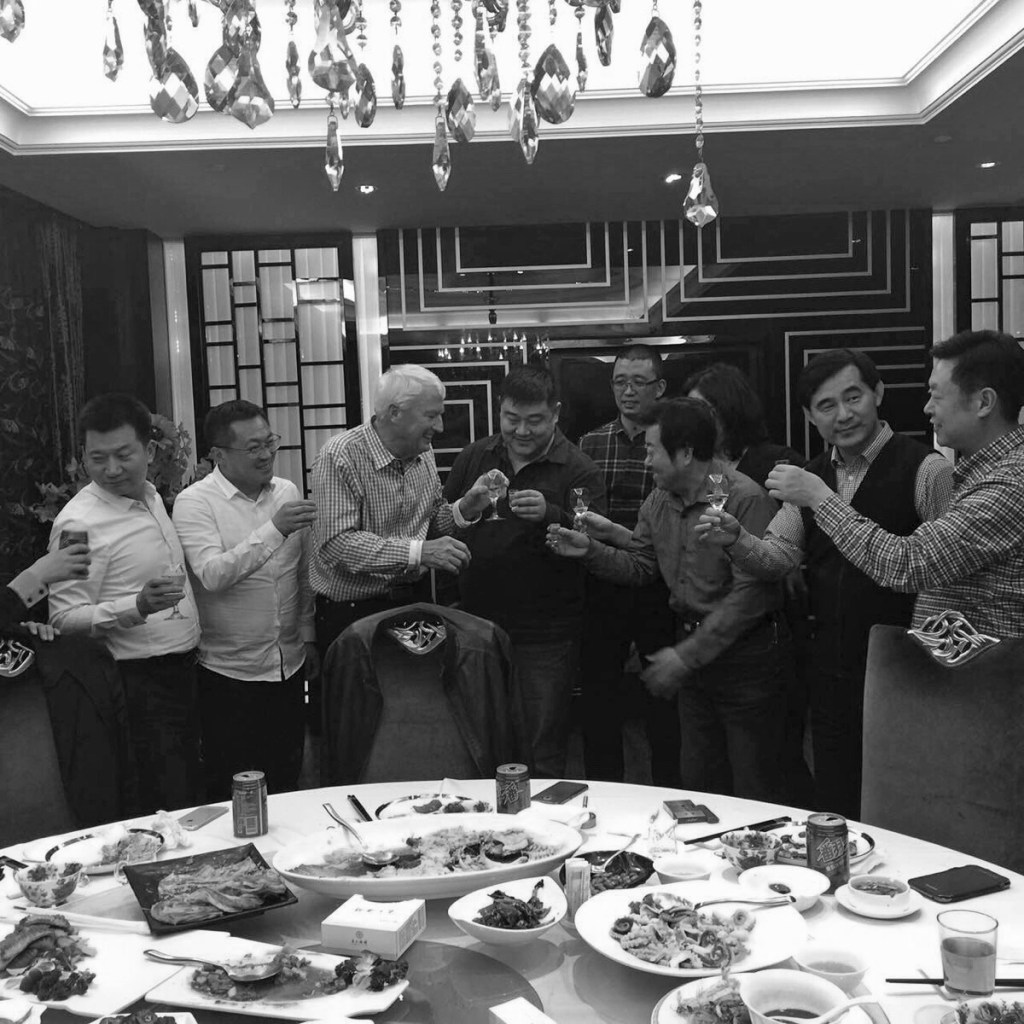
When you first enter a restaurant in China, you are greeted with displays of fresh seafood and meat, along with displays of other items (vegetables, salads). Your host will pick out what he/she believes you will want to eat. The mistake I made was looking at an item in the seafood case, and my host immediately ordering the item, thinking I wanted this delicacy. It is considered rude not to taste the item served to you. You do not need to eat the entire entree, but you should taste the item. My least favorite? Live baby octopus.
You sit at a large Lazy Susan table. The guest faces the door. Twenty or so dishes are prepared, with all diners sharing something from each dish. It’s impolite to refuse the food. I taste it all. And it is good. The Chinese drink a whiskey called Baijiu. It has a high alcohol content. The toast, on each bite of food, is “Ganbei (cheers).” When you hear “Ganbei,” you must drink the entire glass. It’s immediately refilled. This can make for a long night, and a longer next day.
ASCENDING SAGARMATHA (MOUNT EVEREST)

Albeit, in a Beechcraft Super Charged Turbo Prop. Why climb Mt. Everest when you can fly around the Himalayas for $250? Mount Everest, the highest in the Himalayan mountain range, is 29,028 feet. The entire mountain range averages 21,000 to 29,028 feet, per peak, in height. The Himalayas are bordered by China, Myanmar, India, Bhutan, Nepal and Pakistan. Nine guests first waited inside an old terminal for two hours. We were then shuttled to the end of the tarmac in a beat up old bus. No windows, no doors. There we sat, for three more hours, awaiting for the weather to break.
I broke the ice, by asking where they were from, and we all had a delightful visit. An older couple from Australia; two sisters from Belgium; a couple originally from Pakistan, now living in Dubai; a young business executive from Mexico, now living in France; and his attentive, pretty French girlfriend. We talked about everything from family to American politics. I would like to encourage my family to smile and engage people.
ba guan Chinese Cupping
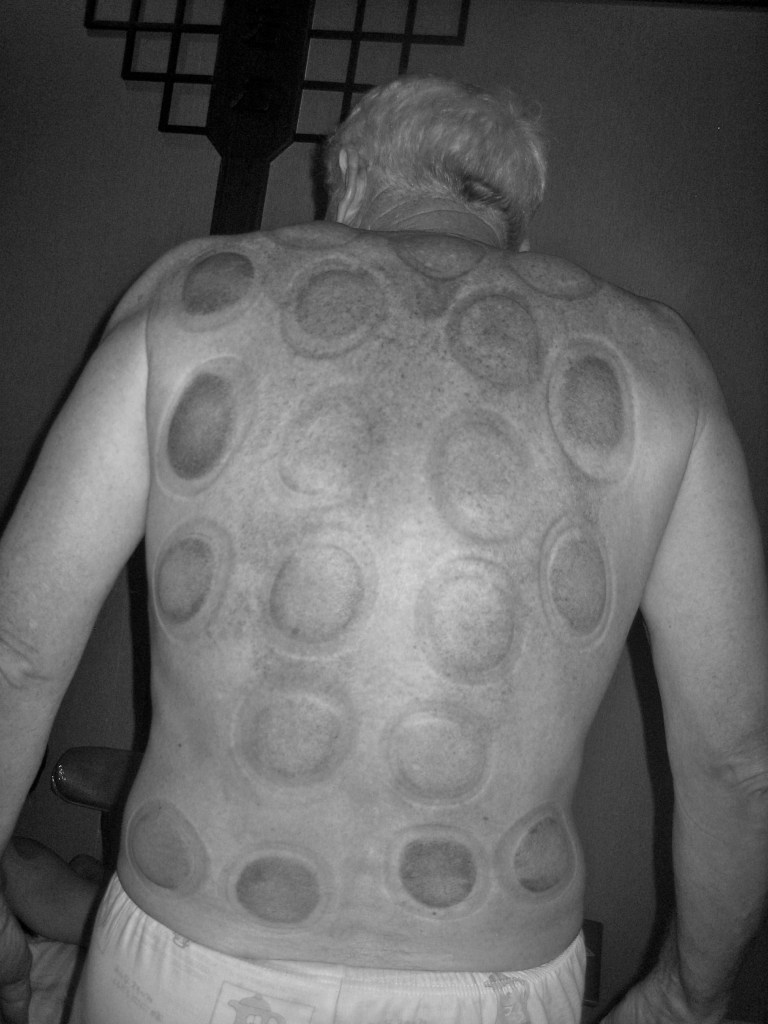
Cupping therapy is an ancient form of alternative medicine in which a local suction is created on the skin; practitioners believe this mobilizes blood flow in order to promote healing. They also believe the darker spots show areas of your body with health issues. Note, my darkest spot was by my heart. No good.
It didn’t do much for me, other than create, “What-did-you-do?” questions from Laurie
Tokyo, Japan – Cultures
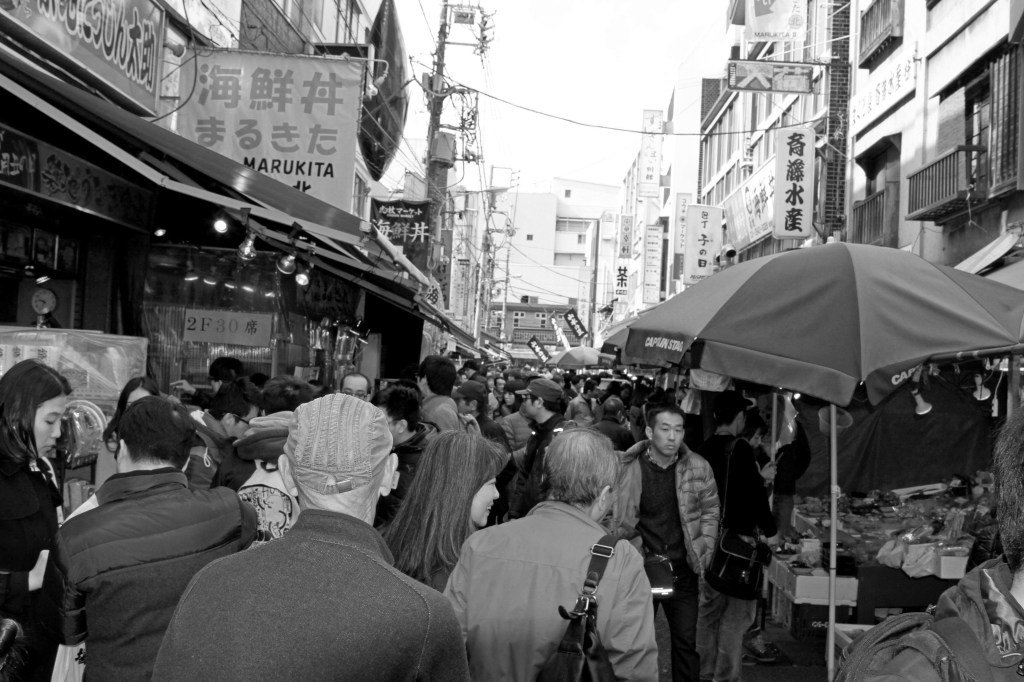
While busy, people were respectful, standing aside
when you wanted to look at a vendor display.

The greater population area of Tokyo is estimated at 35 million. Beautiful city; you can take a train from ward to ward; clean; friendly people and, as a bonus, Mt. Fuji within an hour’s train ride. The Japanese are polite, courteous.
While there are many similarities between the Chinese and Japanese cultures, the key difference, in terms of behavior, is that the former tends to be loud, while the latter is quite hushed and sophisticated. You would be surprised to find that even when it comes to showing public affection, the Chinese are freer to do so, while the Japanese deems this gesture as rude.
The Chinese seem to be more aggressive. For example, when boarding a train, the Japanese line up single file, let passengers depart, and then board. It’s a free-for-all in China, with people pushing and shoving to board. This may have something to do with the size of the population, and the need to be more aggressive.
China has voluminous variety, be it in terms of food habits or dialects or clothing or customs. Quite the opposite, Japan reveals more of a harmonized and standardized society. This difference can be easily explained by the size of the countries – China is much bigger.
A Liter of Fuel


A 7.9 magnitude earthquake, on April 25, 2015. I traveled to the city of Kathmandu on October 18, 2015. Still, massive devastation. And then, India closed the borders, so there is no fuel for Nepal. India was attempting to stop illegal immigration of Nepalese following the earthquake. If they had no fuel, they could not immigrate to India. Autos wait four days for a liter of gasoline in Nepal. One Nepalese fellow told me he’d give blood to his brother, but not a liter of gasoline.
The Pleasure of Making a Fool of Myself
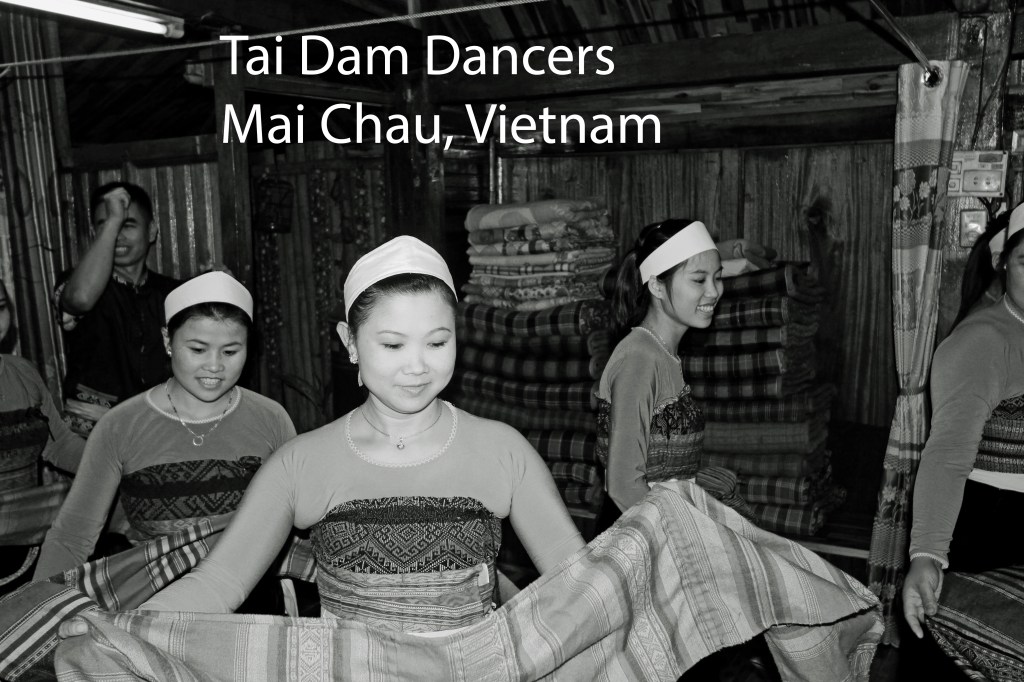
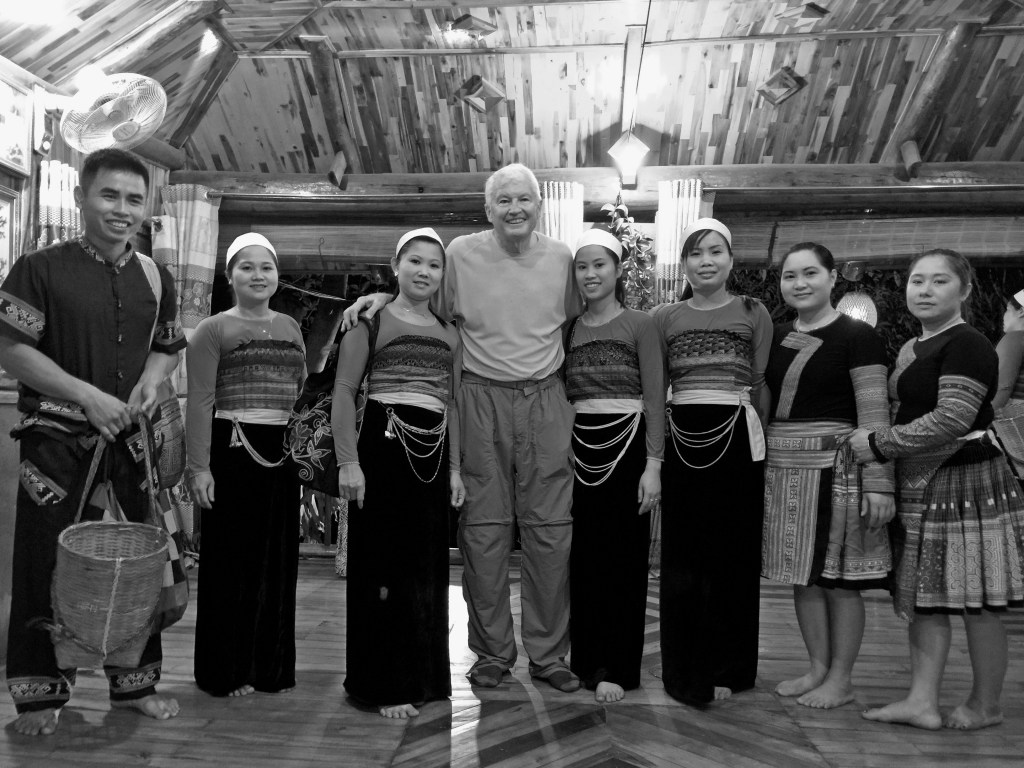
Mai Chau is a district 135 Km Southwest of Hanoi. I stayed with a family and bicycled through rice paddies. After a hard day’s ride, my host asked if I would come to a special dance that night. The Tai Dam dancers were members are an ethnic minority predominantly from China, Northwest Vietnam, Laos and Thailand.
At first, I told him I was tired, and did not want to attend. He told me that this dance was organized just for me. I later learned that the Vietnamese respect former President Bill Clinton, as he normalized relations with the country. My host was sure I was Clinton and wanted to show me off to his friends. So, I participated in a local bamboo stick dance that darn near broke my ankles. Long bamboo poles are placed a foot above the dance floor and smacked together to the beat of the music. The trick is to lift your feet above the poles, prior to them being banged together. My dancing provided much humor to his friends, and brought much pleasure to me.
Powdered Milk

Begging is quite common in all countries and I’ve become a little hardened when approached by someone asking for money. I have a rule. If the person is crippled, or too old to work, I’ll give money. If they are young, and able to work, I refuse.
A woman approached me, speaking perfect English, and asked if I would buy milk for her baby. She was dressed beautifully and I suspected begging was her living.
I purchased powdered milk for the baby, however asked the mother to open the package, so it could not be returned to the store for money.
Two Cowards

JACK’S FARM, Johannesburg, South Africa, June 1997
I first apologize the length of this story, and also apologize for my disparaging comments. I’ve gone to great lengths, in my Blog, to only say nice things, and focus on people & cultures. I have therefore changed the name of the bed and breakfast to Jack’s Farm.
Africa always seemed like the sort of place one fantasizes. Close your eyes for a minute.
Falling to sleep with an open fire, in a romantic tent. Never mind it is in the bush of Africa, surrounded by the sounds of wild animals. Oh, we did experience some of that. “It tends to make three six-footers snuggle up in the middle of the tent, when a herd of elephants pass.” I’ll save that for a later story. As a tickler, I’ll warn you that Laurie is not the sleep-in-the-tent-in-the-bush-of-Africa type. This story is about another side of Africa. You see, years ago, Laurie and I (and our dear friends, Whit & Paula) traveled to South Africa. Our journey began in Cape Town, with visits to Jo’Burg (I’m entitled to call it Jo’Burg…I’ve been there.) For you that haven’t, it’s Johannesburg. Our trip continued into Botswana, Zimbabwe, and Zambia. It was our usual do-it-yourself, no-tour-guide style. South Africa does have Budget Rent-A-Car. The trip began with my letter to President Nelson Mandela, a man who was respected by the world. More than respected; he was one of the most dynamic, revered politicians of this century. I asked for a private meeting. My letter praised his efforts, and suggested he might enjoy meeting us. We were, after all, delightful people. Nelson must not have agreed, as we never met. He must have been busy with the crisis in Zaire. Please don’t interpret the following story as Andy’s impressions of South Africa. I loved the place; would return in a heartbeat; and considered investing in retirement property. Unfortunately, I’d be on my own. It’s the Laurie-in-a-tent deal.
We wanted to see another side of South Africa. South African tour agents generally direct you towards a very white South Africa. We, loving people of all kinds, wanted to see for ourselves the various sides of the political conflicts in South Africa. We particularly wanted to see the struggles of the black South Africans. There was not a better place than Soweto. Soweto is the township outside of Jo’Burg. It is home to four million poor people, struggling to get on with life.
Soweto is also where the revolution (if you can call it that), had deep roots. The South African police killed hundreds of women and children in Soweto. We hired a guide to take us inside the township. This may have been the most impressionable experience of my life (at that time). Poverty was everywhere. Typical housing conditions generally meant one porta-potty and a single water tap per block. The porta-potty was added after President Mandela was elected. Just think of it, four million poor people with those kinds of conditions. Children would come to our window to beg. People seemed to be simply existing. The smell was awful. I now know conditions such as this are common throughout the world.
In the middle of this poverty stood Winnie Mandela’s house. It was magnificent, surrounded by a combination of lush vegetation and bodyguards. Nelson’s original house, on the other hand, was very modest.
After leaving Soweto, we were scheduled to stay at a bed and breakfast called Jack’s Farm. Located on the outskirts of Jo’Burg, it was billed as a little bit of paradise. Upon reaching the compound (I mean a compound, with eight-foot concrete walls, barbed wire, and electronic gates), we announced our arrival in the speaker-phone. The gates automatically opened, after which I stepped out of the car. I was immediately charged by three trained-to-kill German Shepherds. The owner of the bed and breakfast yelled at me to get back into the car. That was silly. I was well on my way back to the car. There is nothing like three attack dogs to rush the adrenaline of a then fifty-year-old. Contrary to their name, most South African bed and breakfasts include dinner. The proprietor of the B&B normally dines with guests. We were the only guests on this particular night. This may have been best, as the owner, a fellow named Jack Parkinson, had a bout with malaria. I do not know if you have ever seen anyone with malaria, but it is not good. A man will sweat a gallon of water during a very restless night. Due to the sickness, Jack could not dine with us, and asked his wife Joyce to stand in for the night. Jack and Joyce had been having marital problems. She simply did not like the bed and breakfast business. He did, and was unwilling to give it up. I suspected she was having a fling with the golf pro. She was dressed to the nines and quite a looker. During the dinner, Joyce treated the young black women working in the kitchen awfully. She was condescending in her tone, and constantly scolded Mollie for this or that. Joyce appeared to be a racist.
WE ASKED JOYCE ABOUT THE RIOTS IN SOWETO.
She became quite loud and vocal as she emphatically stated that it was simply a publicity stunt. “Those black women and children are cowards. Do you know that they lied down in the streets to protect Soweto from the South African police tanks.” Joyce continued, “It was to get the attention of the media, they are nothing but a bunch of cowards!” Just as we thought we had heard enough, Joyce went on to say, “We got even with them. When the blacks marched on downtown Jo’Burg, a group of my friends decided to perform the same stunt. We decided we would lie down in the streets.”
My good friend, a young liberal/getting older conservative, responded, “Well, did you lie down in the streets to protect Jo’Burg?”
“Of course not,” responded Joyce, “We watched as the government mowed them down with their tanks.” I thought, who were really the cowards? We immediately left our table and adjourned to our room and drank some giggle juice. Leaving at six the following morning was none too early. We could not get away from Jack’s Farm fast enough.
I suppose I can do little about bigots. After all, people will be people. I can do something about Jack’s Farm. I’ve vowed, for the balance of my life, to continually bash this bed and breakfast. So, I strongly endorse a trip to South Africa. Please go, you will love the country and people. But if you go, don’t stay at Jack’s Farm. If this is a little bit of paradise, I’m looking for something better.
The moral of this story was my vow to always bash the bed and breakfast, and now I chicken out, and have changed the name of the B&B. I was a coward for not confronting Joyce at the time. I was a coward for not protecting Miss Molly when she was verbally abused by Joyce. And, a coward for changing the name of the B&B in this Blog. I simply prefer to not say bad things over the Internet. That being said, if I were to name a bed and breakfast, I’d call it Fred’s, not Jack’s.
In Deep DU DU

The French Canal Du Midi runs from the Mediterranean to Toulouse, France. A total distance of 150 miles. Laurie & I self-chartered a 40-foot boat for the trip, upstream, with our friends, Whit & Paula. With bicycles on board, we anticipated pulling over and riding to wineries.
I chose to go upstream. Upstream means dropping Laurie off prior to a lock; carefully pulling the boat into a lock with three other yachts; throwing the line to Laurie (hitting her in the face); and holding on with all my might as they open the lock doors. You then get sprayed with water. The French discharge everything imaginable, including sewage, into the canal. Laurie came home with an infection due to the spray.
Downstream is like pulling the plug of a bathtub. Gentle draining. Next time, we’ll go downstream and no more than six locks. We navigated fifty locks. Probably won’t be a next time. Laurie said, “The next time is when I have Alzheimer’s and don’t remember this trip.”
I should have applied the 6P theory. 6P’s. Prior Preparation Prevents Piss Poor Performance.
The Bridge over the River Kwai, Kanchanaburi, Thailand

Also known as the Death Railway. The Death Railway was a strategic railway built between Thailand and Burma. It was 415 kilometers long and passed through the Three Pagodas Pass. Construction began on September 16, 1942, by approximately thirty thousand prisoners of war and more than two hundred thousand impressed laborers from southern Asian countries. Of these, more than sixteen thousand POWs and one hundred thousand impressed laborers died of many diseases, due to starvation and lack of medical equipment. It is said that the first survey by the Japanese engineers predicted that it would take at least five years to finish this railway line, but the Japanese army forced the prisoners to complete it in only sixteen months.
May peace always conquer violence.
Starbucks Partners

When a Starbucks customer knows you are involved with Splash Stick, you immediately become a rock star. The Starbucks country President of Thailand is Murray Darling. Currently 168 stores, with plans to double the size over the next 5 years (China is opening 500 per year). I have an ongoing Email relationship with Murray. I Email a picture of a Starbucks employee (partner), with the heading, “Stump Murray.” Murray always knows their name. I’ve only stumped him once. This shows something about the Starbucks culture. Employees are truly partners.
Boracay, Philippines
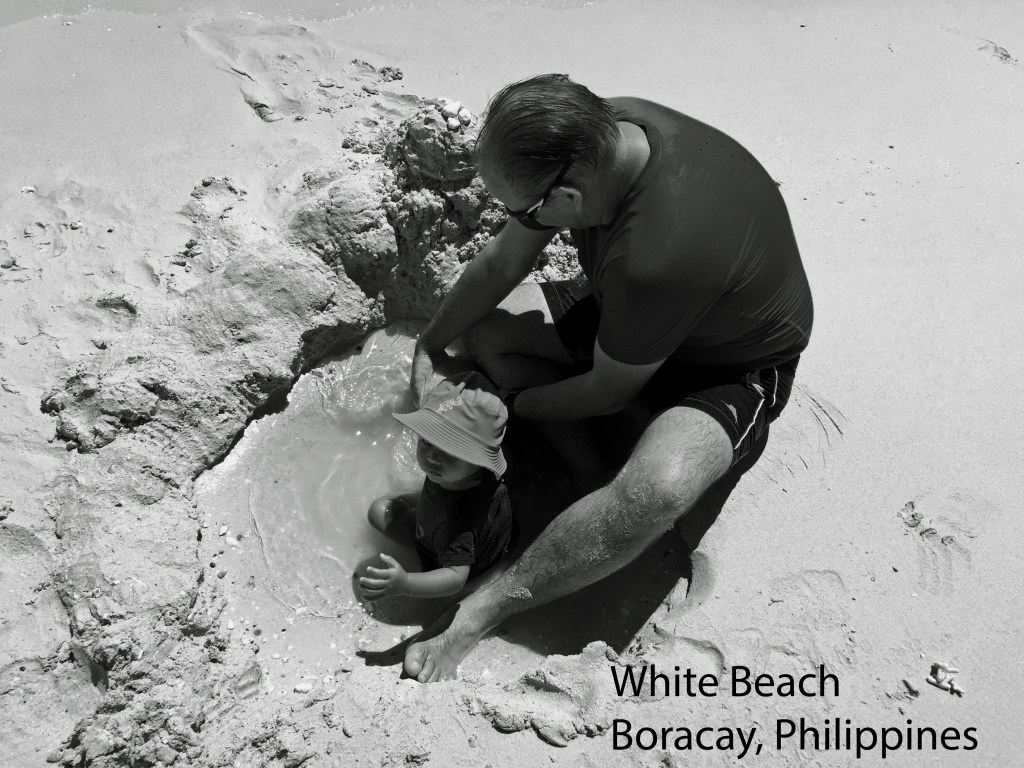
A small island 196 miles south of Manila. The beaches have received many awards from numerous travel publications. In 2012, Boracay was named the best island in the world from the international travel magazine, Travel & Leisure. Friendly people, beautiful beaches, delicious food. What more can be desired?
Female Drivers Are The Best

Tom Burns and I took a night food tour while in Ho Chi Minh City (Saigon). Our tour guides were also our motorbike drivers. The tour company deliberately hires females, thinking they are safer motorbike drivers.
More than three million motorbikes in Saigon. It was, at first, fearful. Second thought, fear is just a waste of your time caused by a lack of familiarity with an experience.
No Fear

I was, at first, was afraid to travel in Vietnam, particularly North Vietnam. I didn’t know how I would be treated, due to my age and possible participation in the war. Four trips later and I believe it to be my favorite travel destination. The culture is young, and in my opinion, forward thinking, forgetting the past.
I Guess He’s A Millennial

Dr. Scott Johnson, College of Idaho Director of Business and Accounting, asked if I would talk about my business career to his Capstone business class. While this class is reserved for senior business majors, Scott invited Shaun Mandiwana, a junior, to attend my first class. Shaun reached out to me after the class, and asked if I would mentor him. So, who is Ofhani Shaun Mandiwana? Easy answer. Someone who has enriched my life.
Shaun was born in 1991, in the village of Mapate, Limpopo Province, South Africa. Limpopo borders Zimbabwe. 1991 was of significance to a newborn, black South African, as this was the year Nelson Mandela was released from prison. Apartheid would end in 1994, giving hope to young black South Africans. Shaun’s village was small; families living in huts, with no running water, and outside toilets. If you wanted a bath, you would go to the river once a week. An area in the river was reserved for men, another area for women. Children bathed with the women. The men each owned a rock in the river. No one could sit on your rock, unless it was an elder. While Shaun has not been back home for several years, he still maintains ownership of his rock. His father, having secured a government job, moved the family to Pretoria when Shaun was ten. Shaun, at that time a forth grader, spoke no English in an English-speaking country. He did speak Sotho, Zulu, and Tshwane. He now adds English and Spanish to his language arsenal.
His father sent him to Mozambique in the ninth grade, for two years of schooling. He then was granted admission to a prestigious United World College in Swaziland. This was the school that educated the children of Nelson Mandela and Desmond Tutu. Shaun graduated with honors in business, chemistry and physics. He then looked at twenty colleges in the United States, narrowed the selection down to six, and was granted a full-ride, Davis Scholarship at the C of I. He graduated in 2014 with double majors in Business, International Politics, and Economics. Shaun has been actively involved with the college, serving leadership roles in several organizations.
Shaun wants to give back to his village and, at the time of this writing, has given computers to a home in Mapate, providing care for thirty-seven abandoned African children. Most have HIV, AIDS, or some type of deformity, so their families no longer want them living in their homes. I’ve never met someone so young who is so grounded. His goal is to learn and return, giving a better life to those living in his village. Shaun is a self-admitted idea guy. He knows he cannot single-handedly solve the problems of the world, but as a leader, he can recruit others to assist. He is fiercely competitive in a gentle, non-assuming way. It’s a blessing apartheid ended, or tomorrow’s world would not have had the opportunity to see the things he’ll accomplish.
Family Update: After leaving college, Shaun married Akshata, a lovely woman he met at the College of Idaho. They had two weddings, one with her family in India, the second wedding in South Africa. Shaun and Akshata currently live in Pretoria, South Africa.
Phrae, or Pray
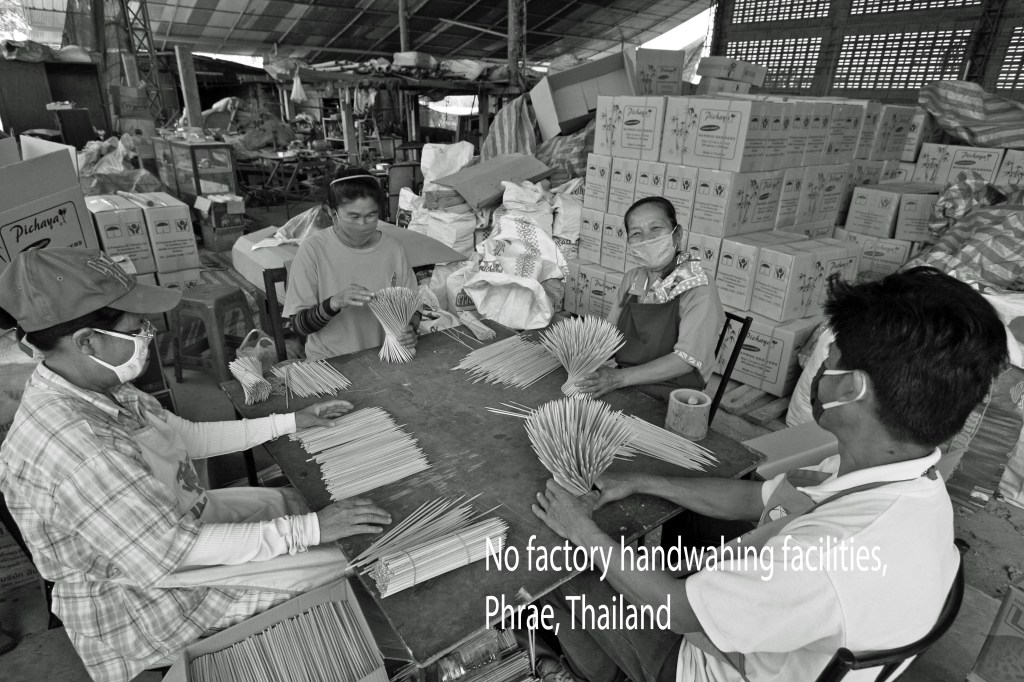
Searching for bamboo coffee stir sticks, I hired a car and took the arduous three-hour drive from Chaing Mai to Phrae, Thailand. The company had a marvelous internet website. They looked solid. I always first ask to go to the bathroom. You can tell much about a factory when seeing their restrooms. Phrae’s toilets were a hole in the ground; no sinks; no hand-wash. Note the lack of gloves as they hand-pack skewers. I’ll never put a bamboo skewer or toothpick in my mouth again. (Individually wrapped toothpicks are fine.)
She’s A Hawker
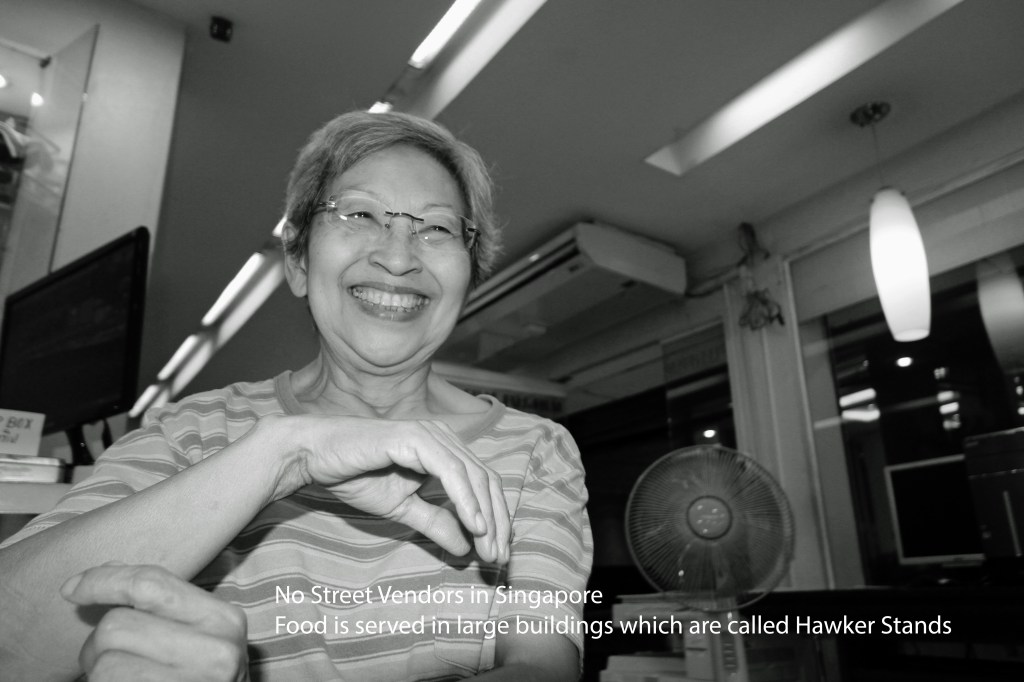
Singapore. My favorite country (large city). Little crime as a percentage of the total population. Beautiful architecture. Clean.
And no street food. Those selling on the streets were placed in large buildings called Hawker’s Stands. Hygiene is regulated by the government. The food is delicious and inexpensive.
That’s the only place you can find something inexpensive. Singapore just may be the most expensive city in the world.
TREKKING IN SAPA, VIETNAM
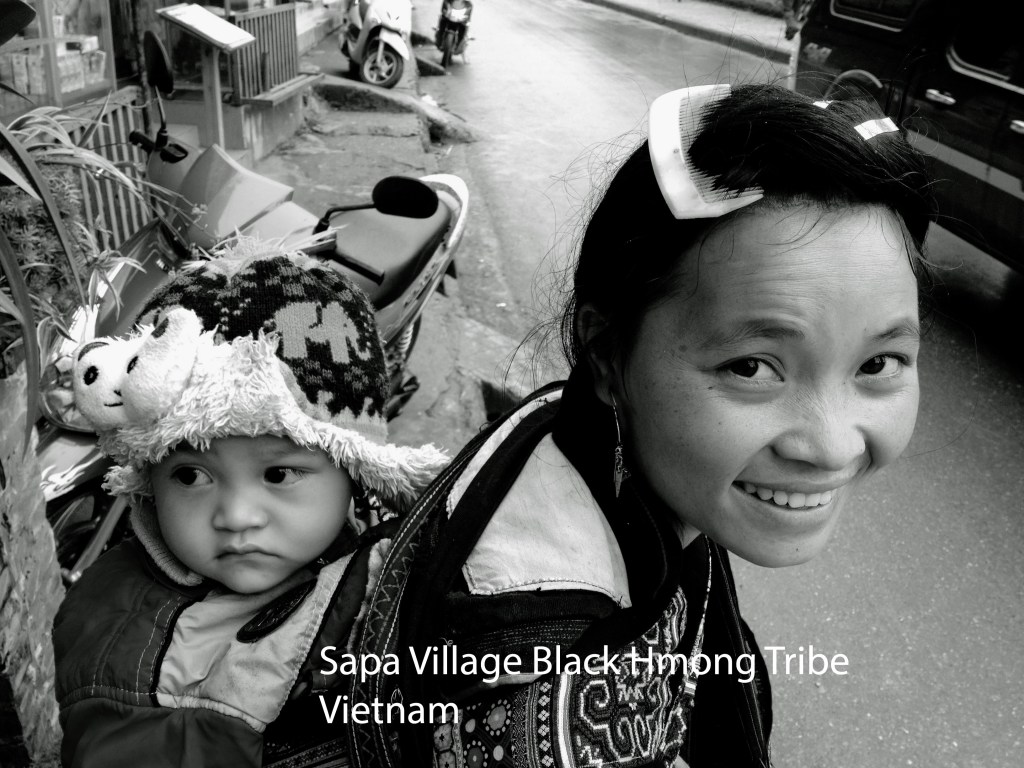
Fly to Hanoi, Vietnam; eight-hour, overnight train ride (sleeper car) to Lao Cai; get picked up by a guide; one hour auto drive to Sapa; begin seven-kilometer trek through the rice paddies; accompanied by two Red Dao tribe women, who hope you will purchase their embroidery; auto back to a lovely four-star hotel for the night; day two trek to village of Cai Choi, accompanied by three Black Hmong tribe women; lunch with a family; auto back to Sapa; sauna, bath & massage ($13); overnight train back to Hanoi; one day sightseeing in Hanoi. Wow!!
My Lucky Day
Seldom do I stay in an American hotel when traveling internationally. It’s best to sample the culture. On a trip to Indonesia, I overnighted in Bangkok.
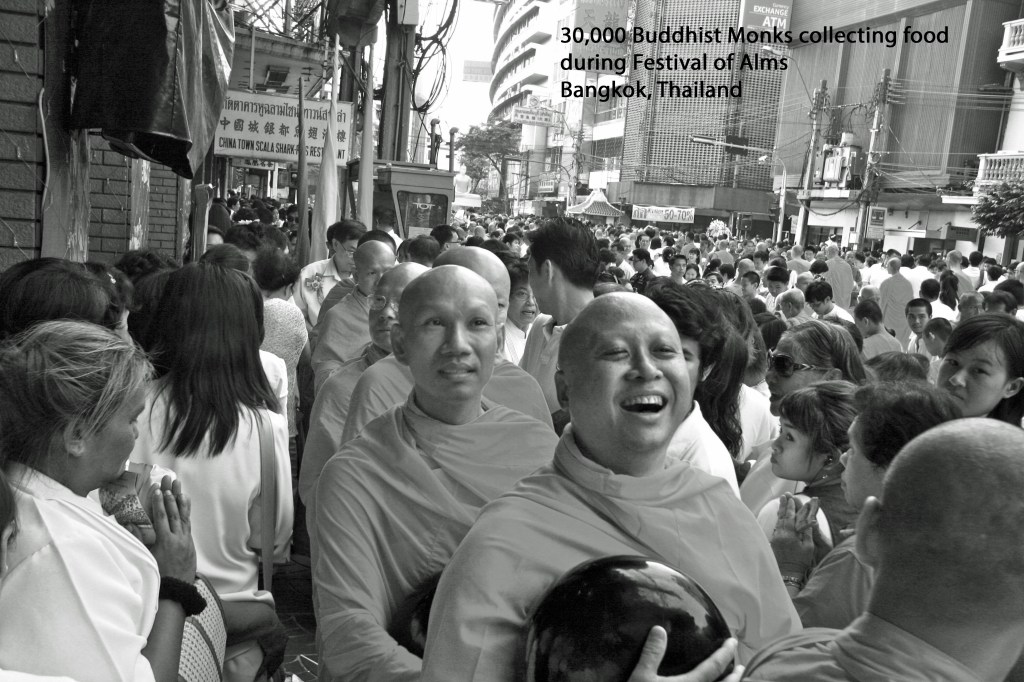
Suvamabhumi Airport, Bangkok, is a major airline hub for southern Asia and Australia. I decided to stay in Chinatown, an area I’ve never visited. Upon checking into the hotel, the clerk said I was a very lucky guy, saying, “Tomorrow morning, at six a.m., the streets will be closed. A Buddhist worship service will be held and thirty thousand Thai monks will parade down the street, collecting food from an estimated one million Buddhists. And, the parade is directly below your hotel room!” So, I’m up at six a.m. and could not believe my eyes. Monks (orange gowns), as far as you could see. Buddhists (white gowns) giving food. Those dressed in black are collecting the food, which will be given to the poor. Loud speakers broadcasting the worship ceremony, with beautiful music playing during the two-hour parade. The hotel sold small packets of food of which guests could purchase. After watching for an hour or so, I headed for the streets, camera in hand, wanting to participate in the ceremony. Previously, when seeing a monk at an airport, I avoided talking with them. They were different. Shaved heads and all. I now know monks dedicate their life to Buddha and the poor. I now talk with every monk I encounter and thank them for their service.
Annie
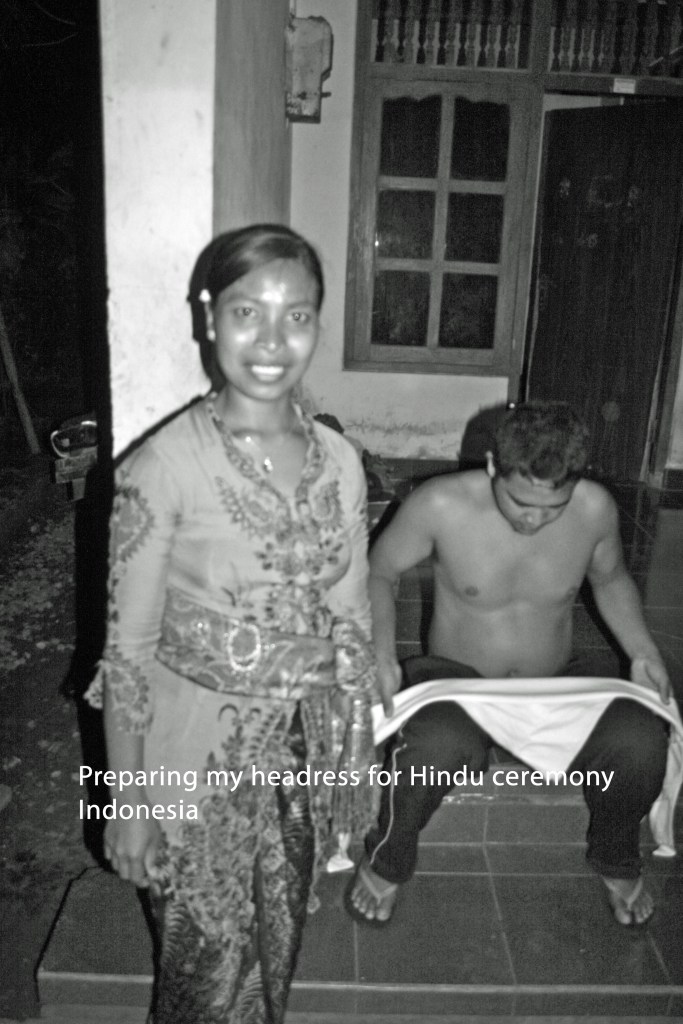
Near the end of my Ubud, Indonesia trip, I decided to walk the neighborhood and take pictures of local housing. A young woman, named Annie, asked if I would like to see her home. Her English was fair and I responded, “I would be pleased.” As I entered, I noticed her husband preparing some sort of food cake with her mother and grandmother watching. They had very little in terms of material items. No furniture, just mats for sleeping. They were obviously poor.
Annie said the food was being prepared for a Hindu temple festival called Calon Arang. The festival wards off the evil witch Rangda, a demon queen who allegedly wrecked havoc on Java in the 10th century. “But Annie, I don’t have the proper dress for temple.”
Annie replied, “You can wear my husbands clothing for the first hour and return his dress so that he can come to temple for last two hours.” So, I’m off to a Hindu temple ceremony.
WHEN FIRST KNEELING in a line, Annie pushed me forward to another line. She said I was in the women’s line and should move up forward with the men. After temple, when I returned the clothing, I gave the family 400,000 rupees ($40 USD).
The following morning, four sodas were delivered to my villa door, with the following note that I have transcribed. Forgive the spelling, it’s Annie:
“Dear Andy, thank you very much for your kidness. You already give me money. Andy, my job–only selling drink in the jungle so, I dont have something for you to say thank you. I’m sory. I just have only drinking. If you want meet with me at work please in the jungle. But to day I’m sick so stay in at home. Andy, nice to met you.
From: Enny”
Quite often, those having the least, are the most giving.
Open Toed Shoes

Kuala Lumpur is a lovely city. I stayed in the club room of a very nice hotel, directly across from the Petronas Towers, once the largest in the world. I was asked to leave the club lounge as the manager said my open shoes were inappropriate in this country. I obliged, put on another pair of shoes, and returned.
As I returned, I noticed two Saudi fellows wearing sandals with open toes. I commented to the manager that it seemed a little discriminatory to me. A Saudi can wear open-toed shoes, but an American cannot. Oh, well, respect the culture?
Thai Shrines -Everywhere

How do you pray like a Buddhist? My Thai guide instructed me to take off my shoes and enter the Temple. “You should kneel; hold your hands together to your chin; and when you complete your prayers; bow your head three times.” It appears the dog forgot to get up from his prayers. I find the religion to be quite peaceful and understanding.
Guilin, China
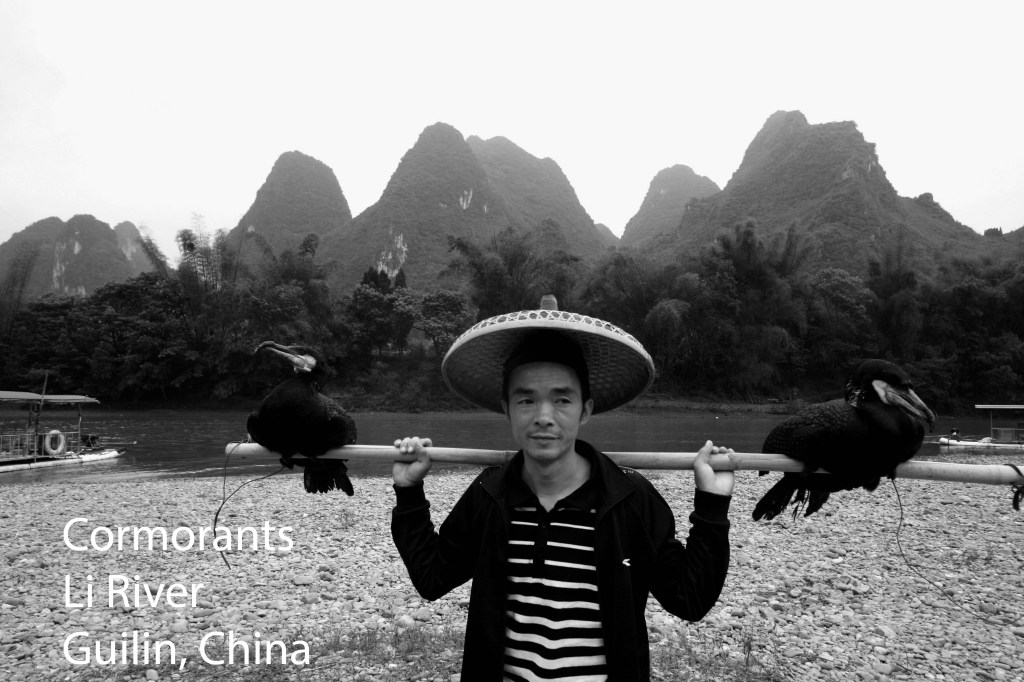
Not sure who did the counting, or the accuracy of the count, however I’m told Guilin, China has 28,000 of the peaks shown in the picture. It is spectacular.
Giving Alms
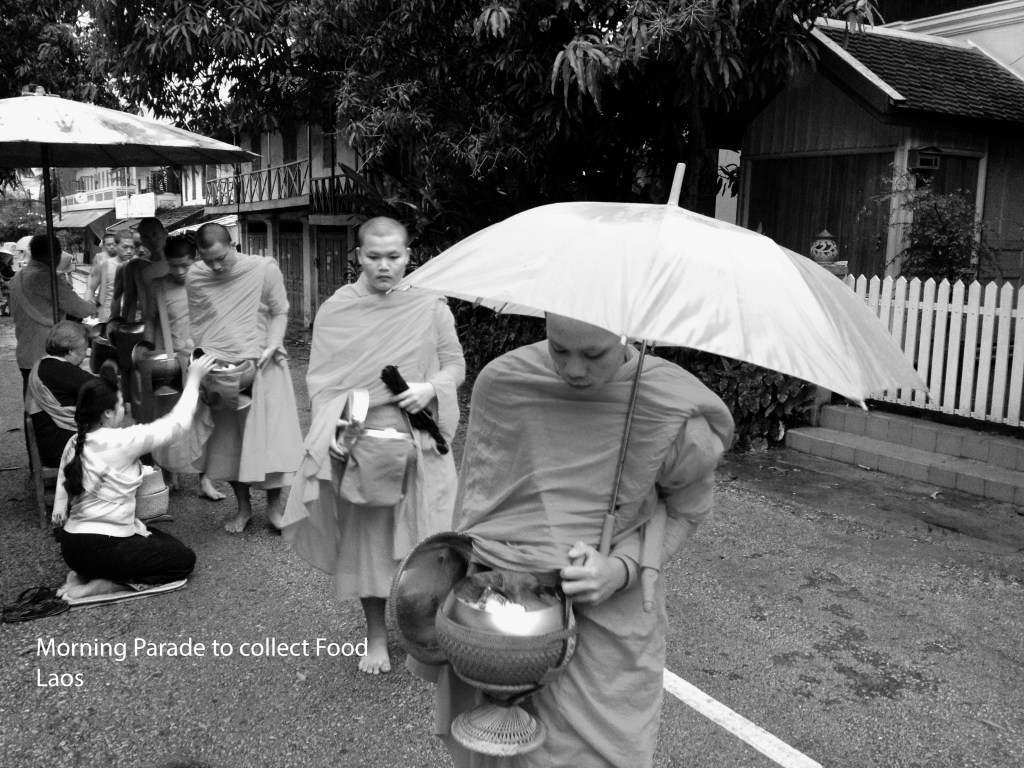
Sai Bat (Morning Alms) is a longstanding tradition in Laos Buddhist culture. In observing it, the devoted offer food to monks throughout the Luang Prabang every morning. … Each morning, starting at around 05:30, saffron-robed monks and novices emerge onto the streets with their alms bowls (‘bat’).
ANGKOR WAT, CAMBODIA

Built in the first half of the twelfth century, this is considered the Seventh Wonder of the World. Angkor Wat is an active Buddhist Temple. Pictures do no justice to the enormity of the complex. It’s simply breath-taking.
Wanting to remove anyone suspected of involvement in free market activities, the Khmer Rouge first killed an estimated 1.5 million Cambodians, and proceeded to cut the hands and heads off of all statues of Buddha. The people of Cambodia, while having little, are delightful.
Raising A Family, in a Cart

Thailand is both 1st, 2nd, and 3rd world. I suppose that’s what intrigues me to the culture. Exclusive resorts and hotels equalling any 1st world country, followed by extreme poverty. This family of four were literally living in the streets. You are looking at their home.
Our Chinese Family
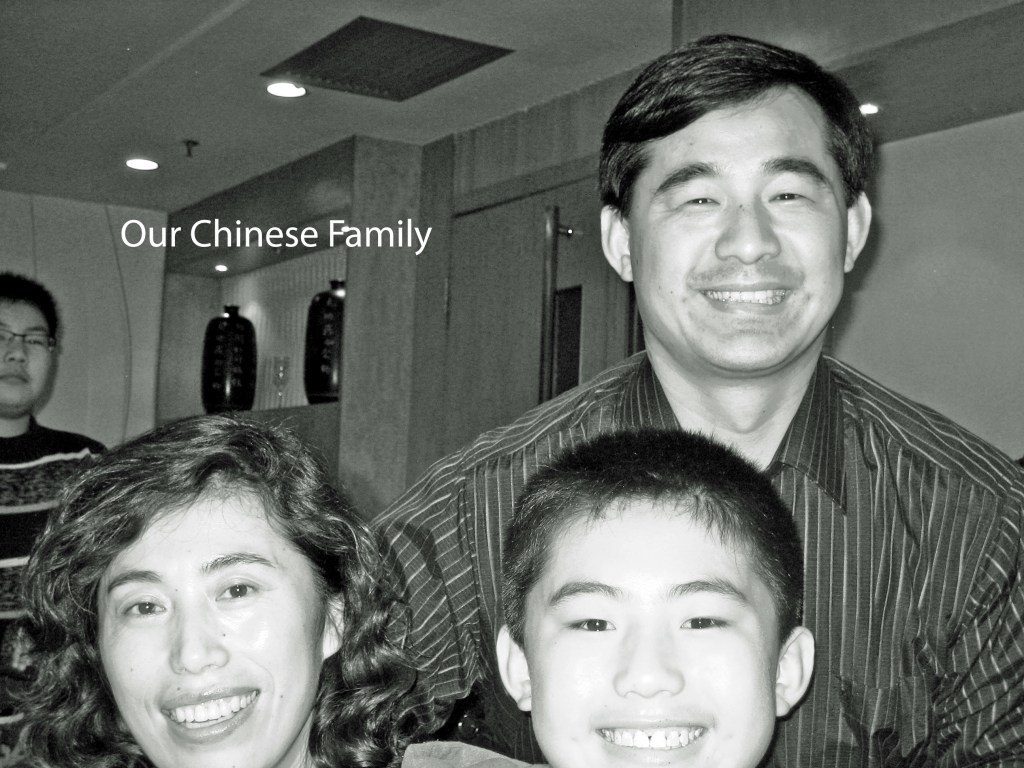
Ketty (English name) asked if I would be her American father, as her father was deceased. Of course I agreed, and we are very close. Laurie and I love Ketty and her family very much. The following are a few thoughts she has mentioned:
“Do things out of love, you’ll be right. Do things out of fear, you’ll be wrong.”
“Life is a mirror. You smile, and it smiles back at you. You cry, and it cries back.”
Our Chinese family. The Chinese admire Americans, thinking our two cultures are similar. Work ethic, I may agree, but they have a three- to four-thousand year head start on culture.

We are involved in a company selling a product called Splash Sticks. This is the little green plug at the end of a Starbucks coffee bar.
The majority of Chinese laborers work 84 hours per week. Starbucks standards are a 60-hour maximum work week, with one eight-hour rest period. We negotiated to pay more for our Stix, at our first factory, providing they would reduce the hours to sixty, and pay the same legal provincial wage. They agreed, and half of the workers quit. You see, “Hard work makes our life splendid.” It is no wonder they are out-producing the world.
We could not get the first factory manager to comply with Starbucks’ Social Responsibility Standards. After multiple trips to China, I felt the manager didn’t believe in social responsibility. I asked him about his other customers and he replied, “My largest customer is Amtrak and they don’t require social responsibility.” Our second factory, located in Yantai, China, is extremely well managed and in complete compliance.
Sometimes You Get Lucky

London: Day one, hop on a double-decker tour bus to get a feel for the city. Then, go anywhere: London is beautiful.
Laurie and I stumbled into a French restaurant and were greeted by the managers. They proudly said they were just awarded best restaurant in London. I said, no way. They presented the paper to declare their victory.
Doing business with a Brit is quite an adventure. They are tough negotiators, no easy money. But for me, I enjoy visiting with Brits. They have a command of the English language I wish I possessed. They are so polite and use vivid descriptors. Lovely this or that. Bloody this or that. I could listen to them for hours. So civilized.

The chairman of Bamboo Forever asked if I golfed. I replied, “Yes.” (I didn’t say I was good.) He arranged a game with two of his younger friends, and suggested we partner together, betting $20. The Chinese don’t use a handicap system, so we played straight up.
We also played, “Let It Lie.” This means you must play the ball from wherever. My first shot landed on the concrete cart path, and I was forced to hit the ball off of the path.
So the other two guys shoot under 80. My partner, 93; and I shoot 110. My partner said, I guess we owe them $160.” I said, “What? I thought we were playing for $20.” It was $20 per hole. I paid the entire bet. I should have known better, as said before, the Chinese love to gamble.
Two Neighbors

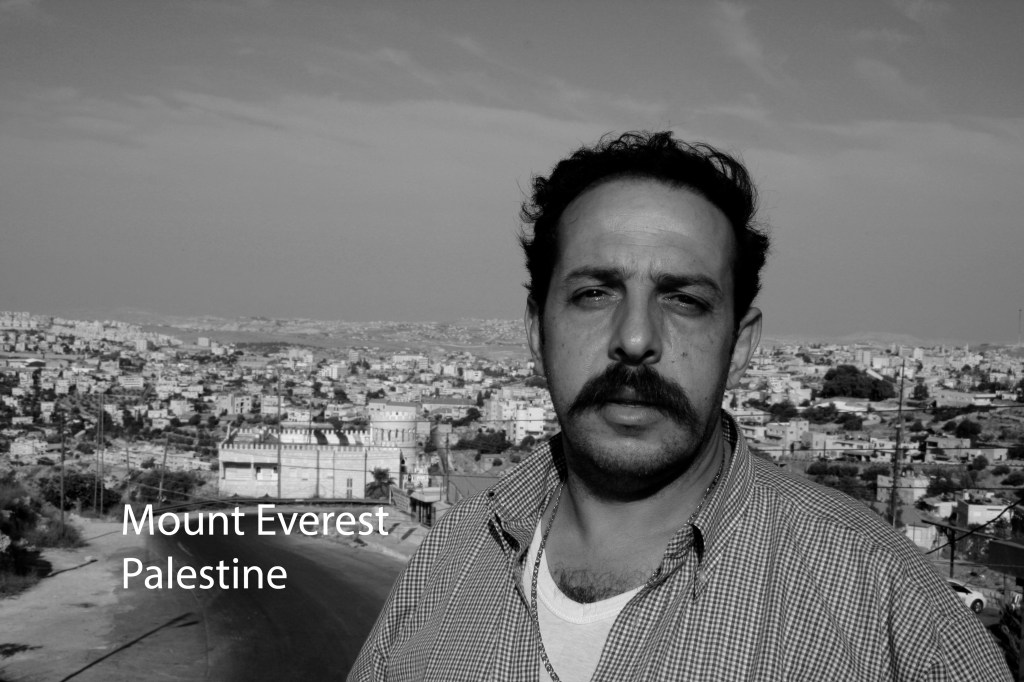
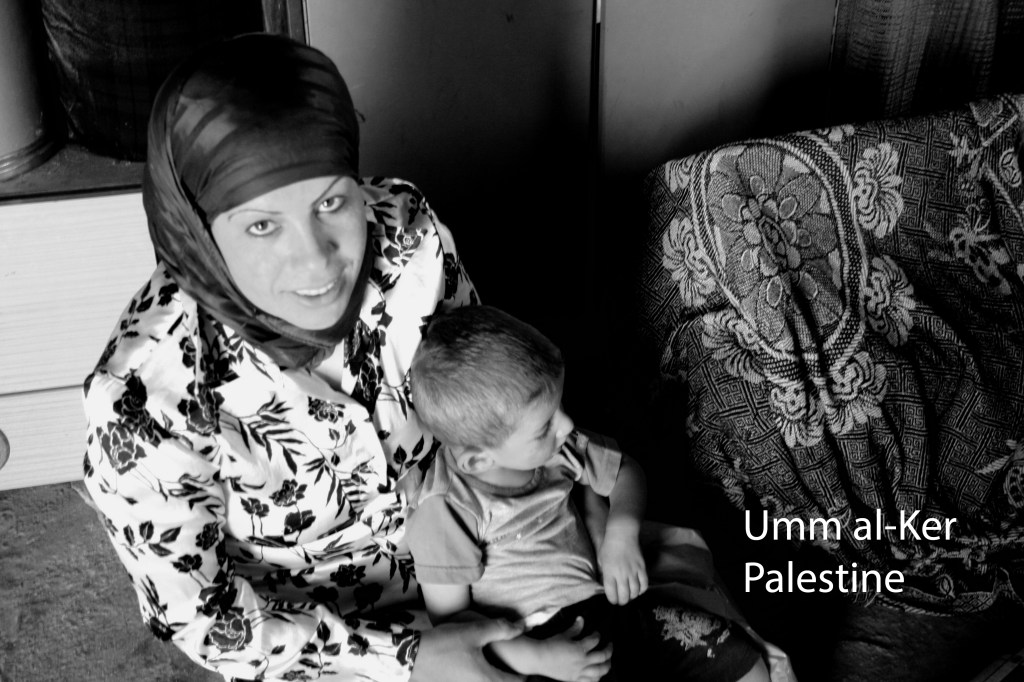
My friend and cousin, Whit Jones, asked if Laurie and I would give money to a foundation he was starting for the victims of the Israeli/Palestinian conflict. After visiting, we decided to start a business between the two entitie, with hopes of the company being sustainable after we were long gone. We wanted a social business in which we personally took no profits.
We wanted to empower women economically and teach them both sides (Israelis & Palestinians) could work together. Trust, naturally, was a problem. Both of us are spiritual, but not necessarily religious. We had no political or religious fight in our goals, and certainly knew we could not solve this age-old conflict.
So, where to start? We needed to find a place to meet; create trust between the women; figure out what to sell; and avoid corruption. The money needed to go to the women.
The area is divided into A, B, and C zones. People cannot freely travel. Whit found a hotel in a zone in which both sides could meet. This, by the way, was a tremendous feat. Other NPO’s (non profit organizations) had not figured this out. The hotel owner, a gregarious Palestinian, was friendly to Israelis. We first needed both sides to trust a couple of Americans, and then trust each other. To cut it short, after a couple of years, mission accomplished.
We then decided to sell hand-embroidered coffee sleeves (a java jacket to protect your hands from coffee cup burns, but re-usable). Our idea was that the Israelis would sew the shell, and the Palestinians would embroider the sleeves. The Israelis would then finish off the sleeves for shipment to the U.S. That was our idea, anyway.
We experienced a small problem. We found, after three years, no interest in the sleeves. This project was bigger than just making some sort of widget. We needed to communicate our story, a story of Israelis and Palestinians working together, talking about their families, talking about life. So, Whit decided to switch our business model to high-end embroidered dresses. I didn’t want to be in the dress business.
As of this writing, I have backed out, however Whit & Paula continue to work toward success. We set up a company; the women are working together; no corruption; a wonderful infrastructure with great people. We have empowered women economically; keep in mind these people are very poor, some living in caves. I admire Whit and Paula for their persistence in completing the project. They get full credit!
In my opinion, ultra-religious Jewish settlers believe that God wants to drive Muslims out of the region. Ultra-religious Muslims believe God wants them to rid the region of Jews. Most believe there has to be room for both.
I’ve written a letter to Prime Minister Netanyahu on my ideas of settling the conflict. I sat next to him, for two hours, at a lounge in Shanghai. Unfortunately, I didn’t have the letter in my pocket. Darn.
Golfing In Vietnam

Montgomerie Links, Da Nang, Vietnam
My golfing friends and I traveled to Da Nang, on the coast of the South China sea, at the mouth of the Han River. Construction everywhere, booming economy. Laid back, friendly and amazing food. The golf was not quite as good as Thailand, however a close second.
A Bucket List
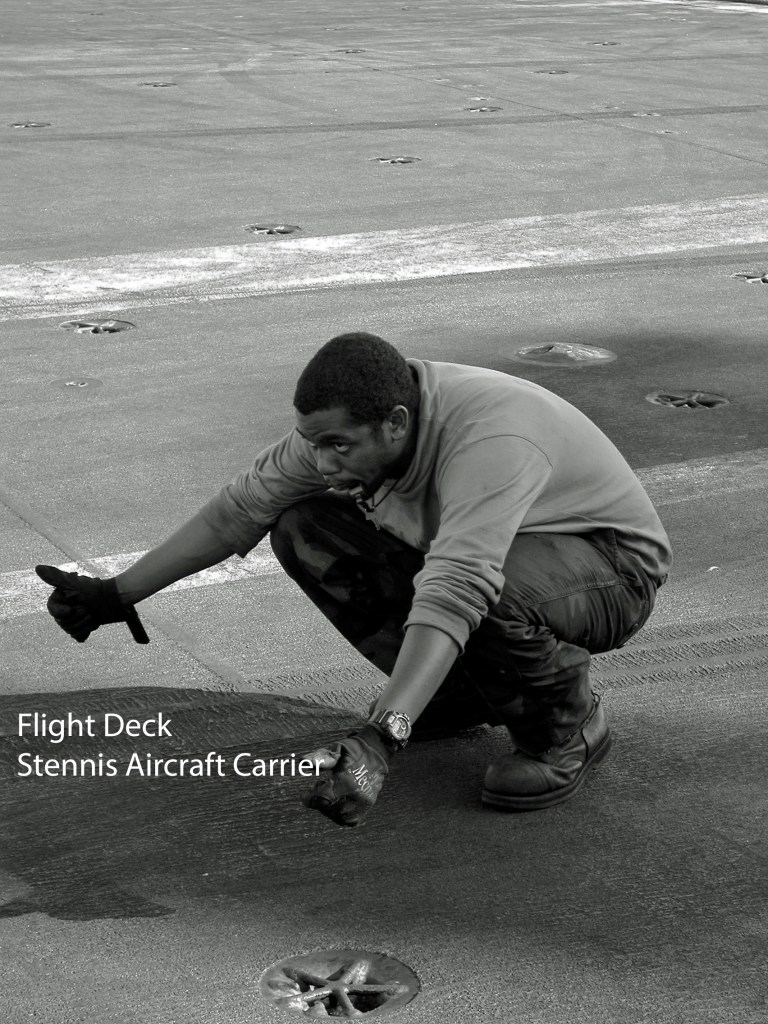
ARRESTED LANDING, 24 hours, and a catapult take-off from the aircraft carrier USS John C. Stennis. That just may have been the granddaddy of all experiences. I don’t want to tell you how I got this gig; it’s a long story.
The Stennis was completing war games one hundred miles off of the coast of San Diego. I was invited to see every operation with the exception of the nuclear reactor. I also had a gourmet dinner with the admiral of Pacific Fleet, and his entourage. As a guest, I was required to introduce myself. It went something like this:
First guy: My name is Tom Burns, VP Boeing Commercial Aircraft.
Next: My name is Dan Evans, former Governor of Washington and U.S. Senator.
Next: I’m the Morgan Stanley Aerospace analyst.
Next: I’m Josh Lucas, actor in Sweet Home Alabama, researching the movie Stealth.
Next: I’m the Chairman of the MIT Aerospace Department.
Next: I’m the fellow who invented the adapters on airplane wings.
It’s now my turn. What could I say? I told them I sold discounted food products to school lunch programs, and was doing my best to save taxpayers money. How’s that for a resume? A good chuckle was had by all.
Buying Art On The Streets Of Beijing
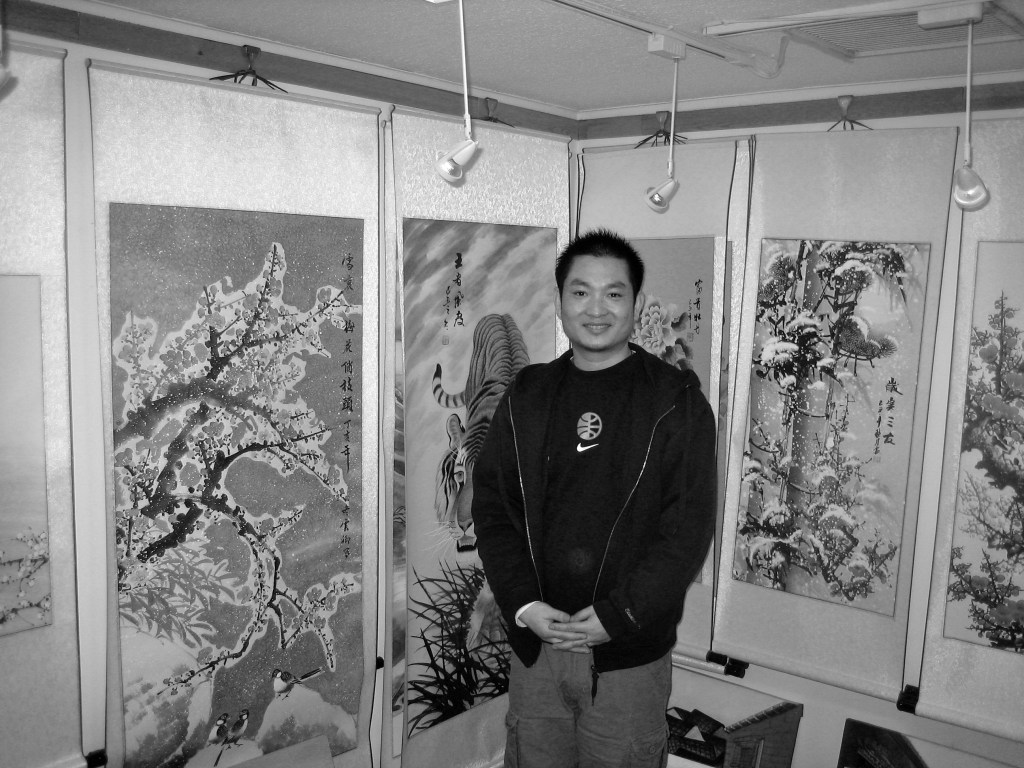
He stopped me, speaking excellent English, and told me, “I will soon be a student in the U.S. I just need tuition. Would you follow me, down this alley, to look at my paintings?” I foolishly did, and after several blocks wound up in his studio.
This is the art gimmick in Beijing. Several hundred alleged U.S.-bound students on the streets, all using this line to suck you into their shop. Few will every attend an American university. And I fall for it each time.
A rather pretty Chinese woman sat next to me on a Beijing-to-Seattle Hainan Airlines flight. She had difficulty placing her bags in the overhead and I helped. She immediately got on the telephone and talked harshly with someone. “I want your goals and objectives, and I want them before you travel.” When she hung up, I told her, “I want to guess your profession. I’ll bet you work for Microsoft, and if you do, that was a little harsh for a three a.m. Seattle call.” She responded that she did not work for Microsoft and the call was to Turkey. I asked, “What do you do for a living?” She responded, “I’m an artist.” Thinking she sold art on the streets of Beijing, I told her I always buy art from those trying to make a living. She told me to be careful. After some additional small talk, we went to bed for our ten-hour overnight flight. In the morning, Jennifer handed me her business card. I googled Jennifer Ma, upon my return. Jennifer Wen Ma was born in 1973 in Beijing, China, moved to the United State in 1986, and received her Masters in Fine Art in 1999 from Pratt Institute, New York. She works and lives between New York and Beijing. In addition to solo exhibitions in multiple Guggenheim Museums, Ma won an Emmy as the chief designer and visual effects for the 2008 Beijing Olympic opening and closing ceremony. I was embarrassed; sent Jennifer an email of apology; she responded, and has become an acquaintance
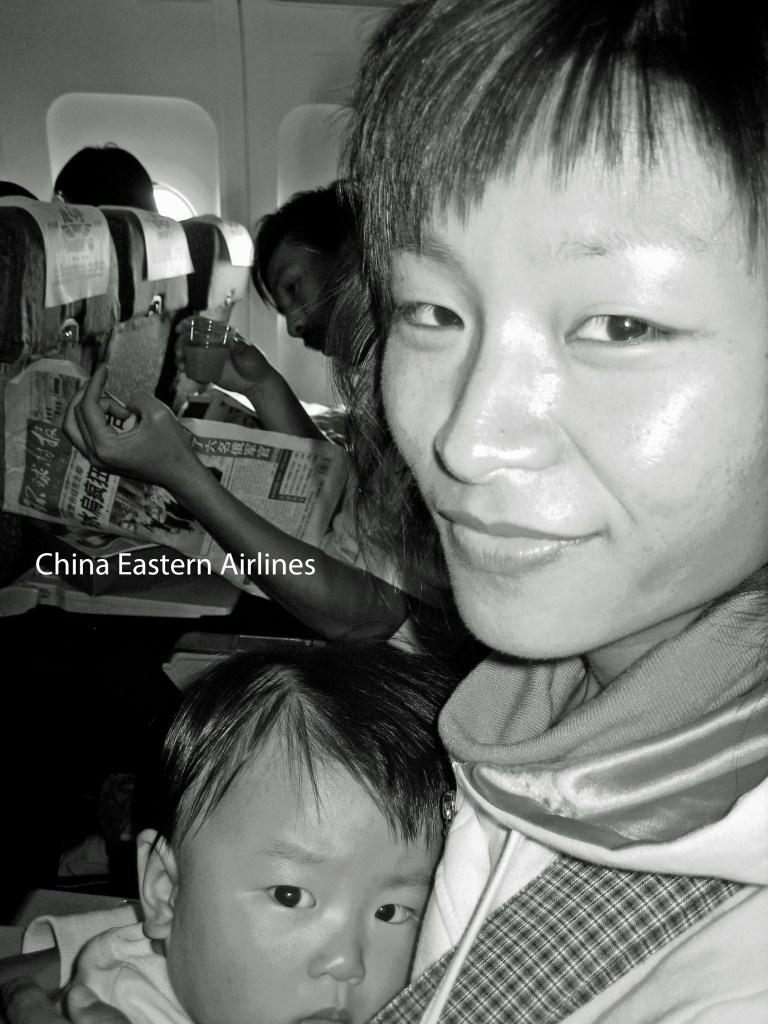
I was scheduled to fly from Yantai to Shanghai, on to Beijing, then to Seattle. There was quite a commotion at the airline counter in Yantai, everyone yelling something in Chinese. The agent, knowing I had an international flight, gave me the last seat to Shanghai. Here’s the problem. I was scheduled to fly out of Pudong Airport. He sent me to Honggiao Airport. It’s a two-hour drive, with Shanghai traffic, to Pudong. I met Amber on the airplane. Her English was perfect. She introduced me to an English-speaking fellow from Hong Kong, who let me share his taxi. I thank Amber for getting me home, although Laurie was not too pleased I jumped in the auto with a stranger. No worries.
Batam, Riau Islands, Indonesia.
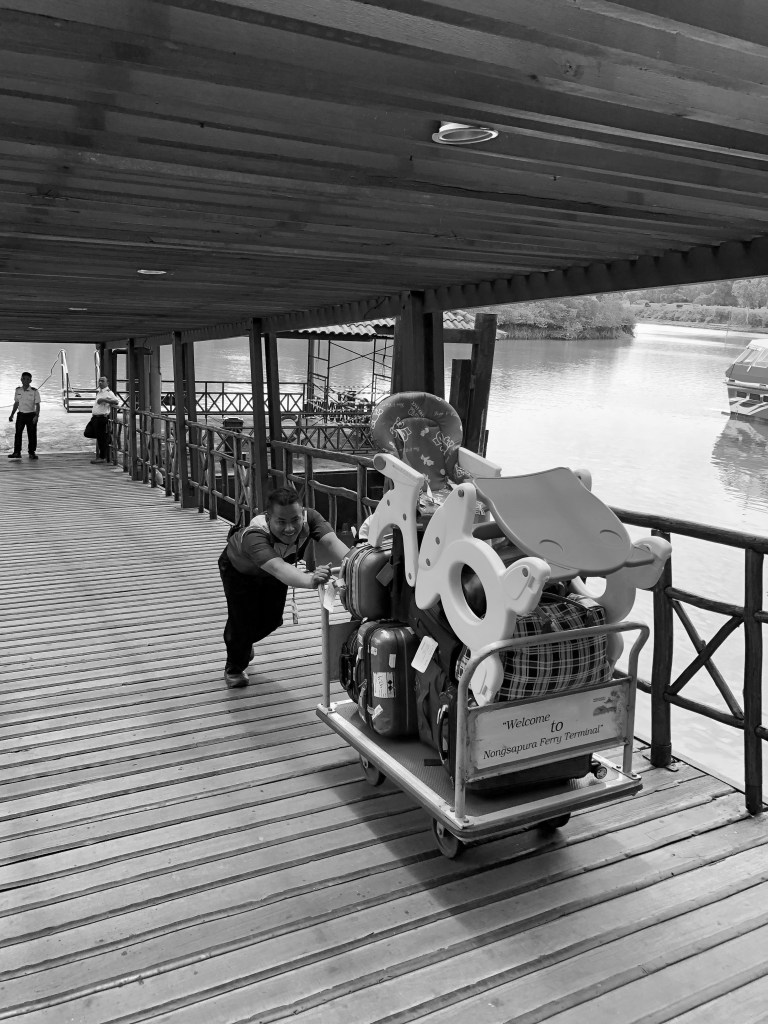
I took a ferry from Singapore to explore the city of Batam, with a population of 1.16 million. Batam is located in a free trade zone, an industrial town, which is famous for shopping. The less than one hour ferry ride makes this a popular shopping destination for Singaporeans. Why? Singapore does not allow “knock-off”, or “copy” brands. If it’s a Coach purse, it must be Coach. Batam has only copies. Large shopping malls with nothing but copied brands.
No More War!

I traveled to Vietnam in 2007, with the hope of sourcing frozen strawberries. The meeting was to be held in Ho Chi Minh City, with the Vietnamese equivalent of our Secretary of Agriculture. Prior to the meeting, I visited the Cu Chi Tunnels. The tunnels, used as hiding spots for Viet Cong guerrillas, form an immense network throughout Vietnam. Life was awful in the tunnels. Sickness was rampant and 100% of the alleged 10,000 people living in the tunnels had some sort of stomach parasites. Nevertheless, the tunnels are given much credit for the North winning the war. After my tour, I watched a propaganda film talking about the “ruthless, baby-killing Americans.” I met with the Secretary of Agriculture the next day. Ms. Secretary was clearly a Hanoi communist, and after the meeting, she asked me, “Please tell George Bush, no more war.” I replied, “If you want our business, you might think about removing the propaganda film from the Cu Chi tour.” She agreed.
I naturally didn’t say anything to George Bush (no connections); returned a couple of years later, to find the film still exists. And I’ve never purchased a Vietnamese strawberry.
Free The Chinese to Make Money, And They Will
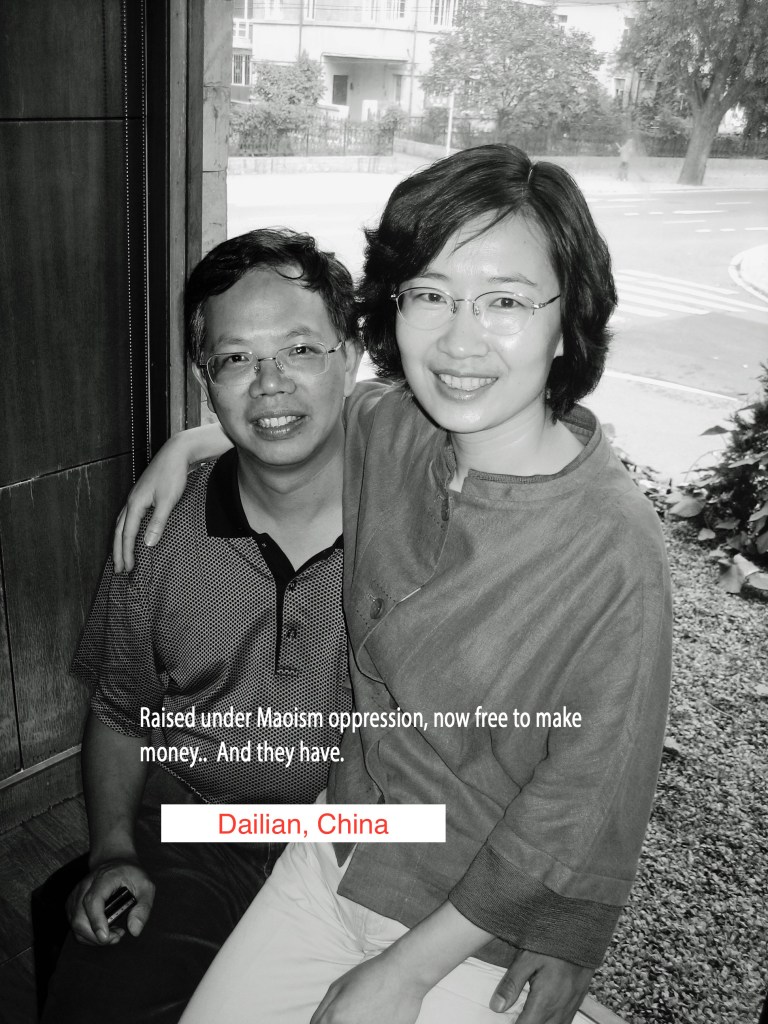
Mr. & Mrs. Charles Lan. Of course, this is their English name. If you are Chinese, your surname is listed first, followed by your given name. Women retain their maiden names. They do not take a married name.
Think about the word “trust.” Without trust, you have nothing. You need trust in a relationship, marriage, business deal, sports, politics, etc. Trust.
Charles told me that when he was twelve, during the Cultural Revolution, the communist government took the family home, destroyed everything they owned, and removed the family to the countryside. “Four of us lived in an 8 x 8 room, sleeping in one bed. We had one cup of rice per day. I know what it was like to be hungry.” Families reported their own family members to the government for not abiding by the rules.
University graduates, teacher & successful businessman (made his money selling fertilizer to the North Koreans). Very good people.
A Western Take On A Chinese Wedding
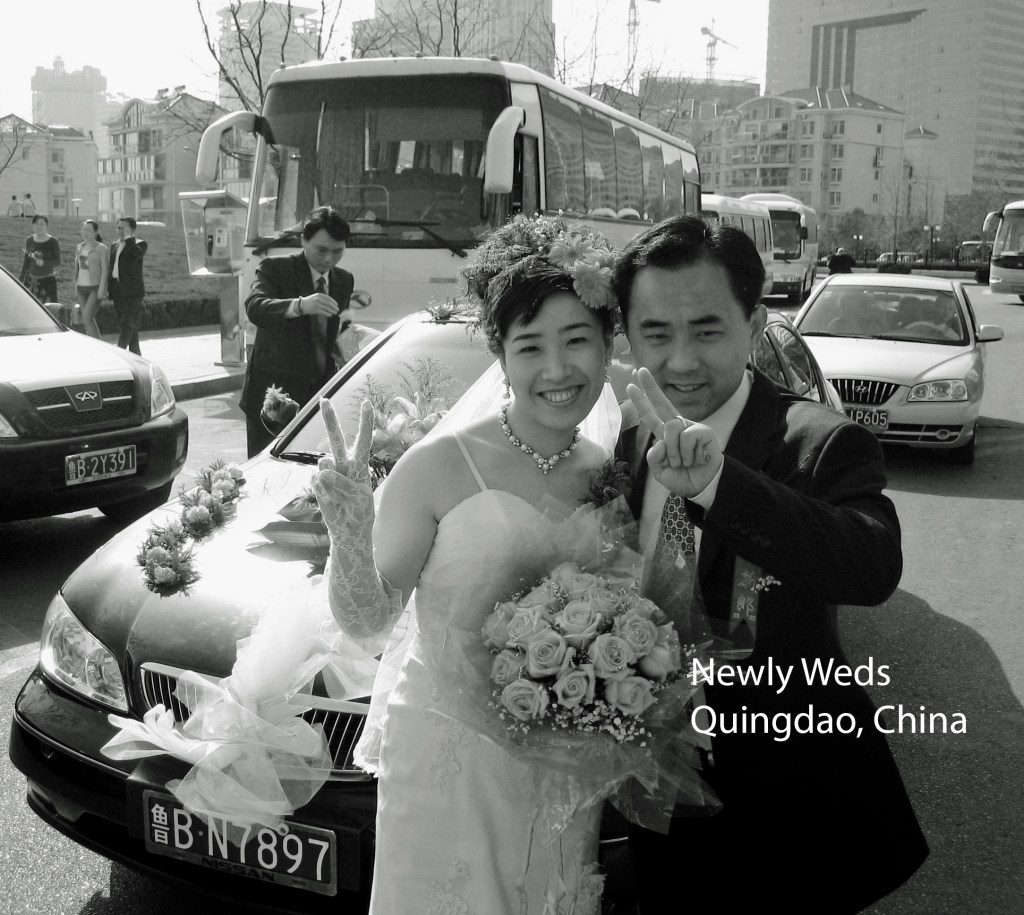
My impressions after attending a fabulous Chinese Wedding. The Bride and Groom serve tea to their parents in the morning. They arrive, at the hotel, with the wedding party, in 4 limos. The Groom escorts the Bride through a group of women playing Chinese drums.
300 Guests arrive at 11 Am; sprinkle rose pedals on the couple as they walk to the hotel; and find their names on a seating table chart.
The banquet is set for an elegant eight-course dinner, including entertainment and much to drink. Each table includes a bottle of Coca- Cola; Sprite; Red Wine; Scotch; and Chinese whiskey..
Two large video screens show the day of the bride, groom, and wedding party. All of the fun events. And, people from around the world offer their congratulations broadcast on a large TV screen.
The Bride is escorted by her father. She is wearing a 30′ wedding veil, and dressed in a beautiful white gown. We were instructed to not wear white (for the bride); red (the bride will change to a red dress): and black (bad luck). The Groom then folds the veil over her head and escorts her to the stage. There is no minister, only an master of ceremonies who sounds like a wrestling announcer, as he screams through a loud sound system.
The Bride and Groom say something to each other in Chinese. I believe it was some sort of promise. Parents are then introduced and each say something. Entertainment then begins and the eight-course meal is served. The Bride threw her bouquet of flowers over her hear to a group of young people. The Bride, Groom and family go around to each table and the entire table toasts with wishes of a happy life. The announcer is still screaming something.
Pictures are then taken with friends and family. Liquor is replaced when each bottle is consumed. It’s now 4 Pm and the Bride and Groom will depart. 5 hours of fun. Nobody notices their departure as much liquor has been consumed. The announcer still screams something in Chinese.
Cleanup begins, & the announcer disappears. It was a fabulous experience!!
 Flowing River